BMX UNION

The latest BMX Videos, Products and News!

  • BMX Videos & News
  • BMX Color App
  • Submissions
  • Home
  • Spoke Calculator
  • Products
    • BMX Frames
    • BMX Bars
    • BMX Fork
    • BMX Stem
    • BMX Grips
    • BMX Headset
    • BMX Cranks
    • BMX Pedals
    • BMX Sprocket
    • BMX Chain
    • BMX Bottom Bracket
    • BMX Seat
    • BMX Seat Post
    • BMX Hubs
    • BMX Rims
    • BMX Tires
    • BMX Pegs
    • BMX Hub Guard
  • Featured
    • Interviews
    • Bike Check
    • BMX Videos
    • Photogalleries
    • BMX Reviews
    • On the Horizon
    • Through The Lens

What Does A Warranty Cover?

February 23, 2016

If you have ever wondered what does a warranty cover when it comes to BMX bikes, frames and parts, then you’re in the right place! Here’s everything you need to know to make the process as easy and simple as possible!
What Does A Warranty Cover BMX

Here’s a topic that we have been thinking about quite a bit lately after seeing different people trying to call out brands on Instagram for not replacing their broken frames and parts. In a perfect world, it would be amazing if you could go out and ride hard, break a part, then hit up the brand and get a replacement for free, right? Well, unfortunately that’s not the real world and it seems like a good number of people don’t understand just what a warranty actually covers. This post is for all the brands, shops, distributor, and social media managers that deal with these requests, sometimes from very rude and angry people, on a very frequent basis. So, What does a warranty cover? Let’s talk about it…

What Does A Warranty Cover?

Here’s a look at the different types of warranties most BMX brands offer.

Limited Manufacturer Defects Warranty

There are a few different styles of warranties that are offered in the BMX industry. One of the most common is a warranty against manufacturer defects. What does that mean exactly? Well, it’s actually pretty obvious. If you buy a product and it comes out of the box with issues like crooked tubing, improper welds or something that prevents the product from functioning like it was designed for… Then you have an issue. Let’s say for example, you order a frame and it shows up on your door step with dropouts that don’t line up, making it impossible for you to put your rear wheel in centered. That’s a manufacturer defect. Or, for example from experience, you get a frame and the seat tube diameter is too small and you can’t fit the standard style of post in it… That’s a manufacturer defect.

If you’re trying to warranty a frame with a dented or bent tube or something caused by riding or improper installation like stripping the threads on a stem or wheels, this isn’t something that is covered. Why? Because it was caused because of riding or some other force outside of the control of the brand who created the product. It’s not their fault you beat your bike up or didn’t know how to properly install something. This is why it’s highly suggested you have anything installed on your bike by a trained professional. Given, working on a BMX bike is about as simple as it gets, we’ve seen people really mess things up by doing it wrong.

What about cracks on welds? This is something that can be looked at in a case by case basis because SOMETIMES a bad weld or materials could have caused the damage. We say sometimes because 9 times out of 10 it’s because the person riding was hard on the product and caused the damage that even the strongest of welds wouldn’t have been able to handle.

Most warranties that cover manufacturer defects only last 30 to 90 days and sometimes up to 1 year. You MUST be the original owner (No, you can’t warranty something you bought second hand off a friend even if it was like new) and most of the time they require you to have that fancy warranty card that comes with most higher end products like frames already sent in. It’s your responsibility to follow the guidelines, since most of the time if you have failed to produce proof, it won’t be covered.

Lifetime warranty against defects in materials and workmanship

Similar to the Limited Manufacturer Defects Warranty, some brands offer a lifetime warranty in the same fashion. No, this doesn’t mean you’re going to get a replacement if you hit up the brand 2 years later because a “defect” has been discovered after beating the crap out of the product. It’s the same thing as the limited version above, but you don’t have a set time frame to get your claim in. You must be the original owner and have that proof of purchase and warranty card to make this one work in your favor. This won’t cover anything that broke from riding!

Limited “crash replacement” warranty

Here’s one for those of you who are fans of taking advantage of warranties after beating down a product. Some brands, for example Sunday Bikes on a few of their items in their product range, offer a limited “crash replacement” warranty that will cover bends, cracks or breaks caused by normal riding conditions… Not because it fell off the bike rack going down the highway, your buddy dropped a hammer on it or you were hit by a car and then a tornado came and sucked it up into the sky launching it a mile down the road. We’re talking you crashed riding your skatepark, trails or a street spot and it was damaged. Things some what normally caused from the style of riding that we do on a BMX bike. Once that happens, then you need to have proof of purchase, that warranty card and a little cash because this warranty doesn’t give you a new replacement for free. It’s going to be a replacement for a reduce cost than buying it new.

Lifetime Warranty

Ah, the good old fashioned LIFETIME WARRANTY that everyone wished (or assumes) was available on every single part on their bikes. For example, Odyssey offer a lifetime warranty on their 41-Thermal heat-treated products. This warranty will replace broken products that have bends, cracks or breaks caused from normal riding conditions 100%. In some cases they will replace it with a newer version or a different product that is more suitable to what you should be riding. Similar to the crash replacement, this is damage caused by riding and not outside forces. This also requires you to have a warranty card filled out and you being the original owner. This is also one of those warranties that will be looked at in a case by case basis.

So, that wraps up the different warranty options that BMX has to offer. Obviously these different tiers have their own advantages and flaws that may benefit somebody that doesn’t deserve a warranty or may burn somebody that has a product that is truly covered in a warranty.

A few things to note:
– When you’re in the process of starting a warranty claim, be as polite and friendly as possible. Sometimes that will help you out even if your warranty claim is beyond what is normally covered and they will do you a favor… If you’re demanding, rude and impolite, you’re on the fast track for getting denied… Even in some cases when you actually have a real qualified warranty.

– No, you won’t receive a brand new replacement in a day or two. Warranties will take time and sometimes it can take a week or two to actually get you the replacement. If a company based in the U.S has to ship a product to Australia for example, you can expect it to take a few extra days since shipping overseas will take time.

– Want to avoid that wait time? Take the product back to the shop or contact the mail-order you actually purchased the product from. They will verify if the product is covered and then get you another replacement from their stock or the brands distributor which will save a lot of time. Going directly to the brand can cause delays since they will most likely have to reach out to the distributor and shop you purchased the product from anyway before they can do anything.

– KEEP YOUR RECEIPTS! Some places will have your order history saved, but most of the time it’s on the person who purchased the product to keep the receipt to have proof they were the original owner. Without this, it’s highly unlikely you will be able to get a replacement.

– Fill out the warranty card! It takes a minute and can save you a lot of headaches if you’re trying to get your product replaced. Sure, you lost it, accidentally threw it away with the boxes or your dog ate it… A few brands even allow you to register your warranty card on their website. Don’t be lazy if you want to make sure you’re getting the full value of the product you’re buying.

– Understand that you aren’t the only person in the world who needs attention. A lot of brands are smaller operations than they may seem, so sometimes it might take a few days to get a response from them, so don’t freak out! Which leads to my next point…

– Talk to the place you purchased the product from or get the warranty information on who to contact direct from the brands website (Most have a link at the bottom of their website) to EMAIL them. Reaching out on Instagram, Twitter or Facebook is usually not the best route to go to complain or ask for a warranty. Some brands have thousands of followers and get a lot of messages and things can get buried, so they can get missed, especially if you just mention them in the description without actually tagging them. General questions will get answered, but warranty questions will 9 times out of 10 lead to a response asking you to email the brands warranty address.

– Don’t be stingy! If you got a lot of use out of a product before it had issues, save yourself the hassle and just purchase a new product – Support the brands you believe in. If you were unhappy with the result of a product you rode, try something else from another brand. If brands had to give out a replacement for every single warranty people try to make claims for (most of which are pretty boarder line in my opinion), they would go out of business. Every sale counts in this industry and most brands are re-investing that money into better products, supporting more riders, events and scenes.

So, that’s the different types of warranties that you’re looking at when you ask what does a warranty cover. When it comes to BMX, there’s multiple kinds of warranties and you’ll want to follow our advice to make it as easy of a process as possible. It can be a little tricky, kind of a pain in the ass and you’ll probably get mad at some point, but it doesn’t have to be that way. Keep your receipts, fill out the warranty card and know if your product is broken from wear and tear or an actual manufacturer defect.

I hope this helps clear up some of the questions people have about what does a warranty cover. Let us know if you have any questions in the comments below if you still don’t have an answer to what does a warranty cover!

VISIT: FRONT PAGE // DAILY SECTION // BMX COLOR APP // BMX VIDEOS // RANDOM

Life On A Boat with Mannie Nogueira

January 28, 2016

mannie-nogueira-cruise-ship-bmx-show-no-hands

A few months back, our friend and photographer Nick Nogueira hit us up about a trip that he was taking to meet up with his brother and flatland rider, Mannie Nogueira, who had been spending the past few months riding BMX during live shows on a cruise ship. Nick asked if we would be interested in checking out the final results once he got back, and of course we couldn’t turn that down! We hadn’t heard anything, then today Nick hit us up with some words and a bunch of photos from the trip where he got a front row seat into just what Mannie had been up to lately. We’ve seen BMX pop up in some interesting places and we’ve seen BMX lead riders to places all around the world doing what they’re good at. This is definitely one of those interesting places and stories to say the least, and it left us a little bit jealous! Take a look and see just why!

Check out the full story and more photos below….

[Read more…]

Let’s Talk BMX Shops and the Direct To Consumer War

January 14, 2016

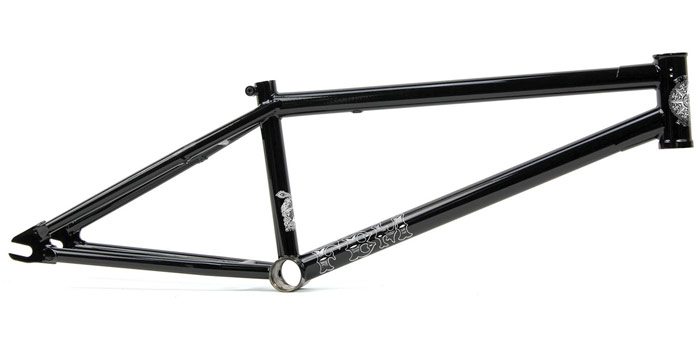
fbm-gypsy-3-bmx-frame-black

Yesterday, Vital BMX released an Harry Main Interview that really fired people up. In fact, FBM and Ride UK have both chimed in on their perspectives on why Harry’s perspective is wrong and the direct to consumer route is not benefitting BMX, at least not in the correct way. I’ve been thinking about the subject quite a bit since I originally read Harry’s responses and I wasn’t really sure if I wanted to chime in. Honestly, going into this blog post I was originally just going to link to FBM and Ride UK and see if we could get any discussion going… Then I decided I might as well point out a few of my thoughts on the value of BMX shops and everything… Then it turned into a big long write up. So, let’s just get into this.

[Read more…]

Perspective on the Future of BMX Contests and Nitro World Games

December 9, 2015

nitro-circus-world-games-course-rendering

Generally, we try and stay away from heavily opinionated posts on the site, since we feel our opinion is just one voice of many, many BMX riders around the world and everyone has a different perspective on this sport of ours. But, today we are seeing a lot of discussion about the future of BMX contests after seeing the plan for the Nitro World Games, which is ultimately looking for a new way to expose BMX, moto-x, skateboarding and a few other action sports to the masses in hopes of pumping the industries full of energy and revived life that many feel is struggling to get the attention of the masses anymore. So, we’re going to toss out our perspective and then we’re hoping to get a lot of discussion going in the comments whether it be here, Facebook or really anywhere we can get riders to discuss their ideas or dreams of where to take this thing we call BMX next.

[Read more…]

Slovenian Scene Report

December 6, 2015

Slovenia BMX scene

One of the best parts about BMX is that you literally can go anywhere in the world and either find something to ride or meet somebody that rides. Sure, some places have some of the best spots and there are more riders than you could imagine, but there are places “off the beaten path” so to speak that are almost untapped places with spots and experiences you cannot find anywhere else in the world and only a few riders who are working to keep the scene alive.

The other day, we received an email from Tyrone Kelly who recently decided to take one of those “off the beaten path” trips to Slovenia, which we don’t see a lot from when it comes to places we see videos and content coming from on a regular basis. The goal of the trip? Experience something new and meet some riders he had yet to have the opportunity to catch a session with.

Although this place may not be as beautiful as a city like Barcelona, Spain, it still had an amazing story contained in it. Tyrone put together the story of his trip and collected a handful of the photos he shot during his visit for you to enjoy below. Take a look and start looking at the map to find somewhere you have yet to experience!

[Read more…]

Pages: 1 2 3

Evolutions of the BMX Fork

November 27, 2015

BMX has seen its fair share of innovation and crazy ideas over the years. The BMX Fork has seen a lot of changes and interesting concepts. Here’s a look at a bunch of unique ones.

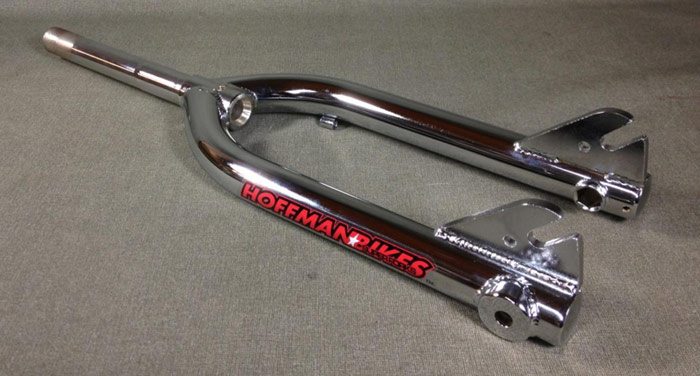
Hoffman Bikes Super BMX Fork

The other day we got thinking that it has been a while since we’ve done an Evolutions feature. We got thinking about some of the different BMX Forks that burned their design into our brain over the years, and then decided to reach out on Facebook, Twitter and Instagram to get a few good ideas of some of the classic BMX forks that have been available over the past 10-20 years. Originally it was going to be the past 10-15, but we got a few suggestions that we couldn’t pass up. Similar to the Evolutions of BMX frames post we did looking at how frames have changed, we’ve seen quite a few changes in almost every aspect of a BMX fork in that time period. So, if you want to take a walk down memory lane… Let’s do this! If we missed something good (which we know there always will be) let us know in the comments at the bottom!

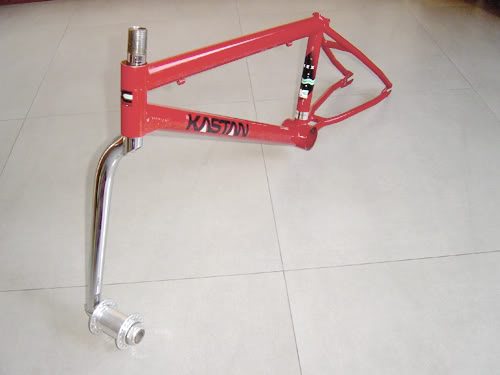
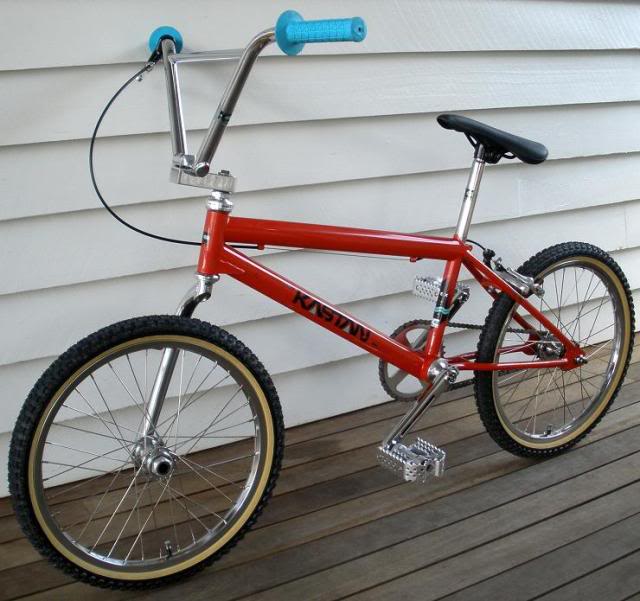
Kastan Uniblade BMX fork

Kastan Uniblade BMX fork
Kastan Uniblade Fork

We didn’t really have a good “starting point” for this one since it seemed like even if we tried to set a point, there would be another suggestion to pop up that would push it back. However, one of the suggestions was the Kastan Uniblade fork which is a good spot in the 90’s. As you can imagine by the name, this one legged BMX fork with a built in front axle / hub, was one of those things that hit and it could have gone either way. Obviously, having one leg seems like a pretty sketchy idea, but the unique concept was enough to get peoples attention. We would love to see how those would hold up to riding these days, haha.

Zima BMX Fork

Here’s one Jon over at Can You Dig It suggested that we honestly had never heard of… Zima (which we only recall a shitty malt beverage company named that) produced this fork which had some wild drop outs and long legs that were bound to catch your eye… or on something as you rolled by. We’re glad long legs are only look good on girls these days, haha.

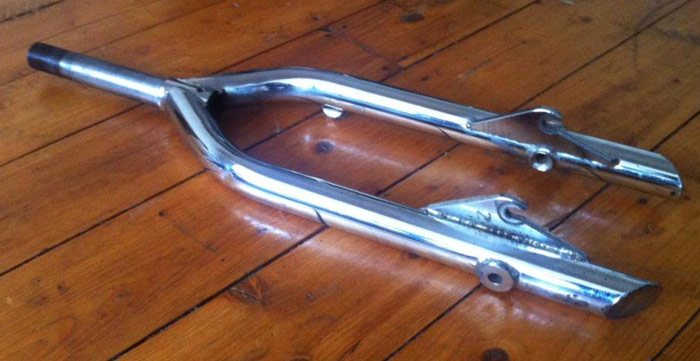
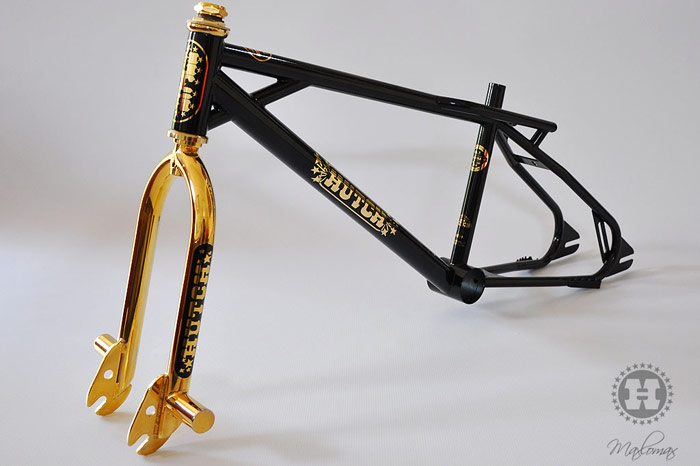
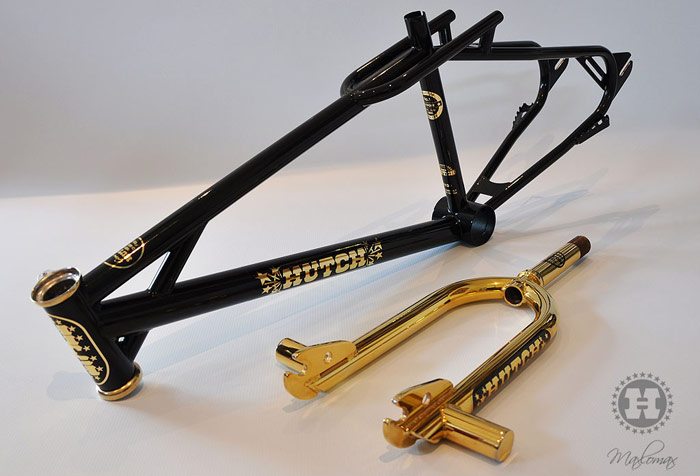
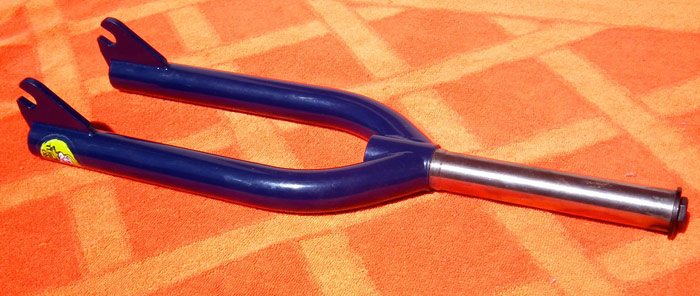
Hutch Trick Star BMX fork

Hutch Trick Star BMX fork

Google is a funny thing. You can search for something and then end up coming across something completely different. While we were looking for photos of S&M Ditch forks (which is below, don’t worry), these crispy photos of this custom painted Hutch Trick Star fork. Although those pegs weren’t made for grinding, they were made for standing and doing all those crazy flatland tricks before ramps and everything really took over. This fork is real pretty, but it definitely wouldn’t last long in the current state of BMX.

Hoffman Bikes Super BMX Fork

Now, this compilation of forks will bounce around a bit from the earlier points just because we honestly can’t remember when these came out other than rough estimates in years. So, we’ll just highlight the earlier forks and get a little more specific the newer we get. Above is the Hoffman Bikes Super fork, which was one we saw a lot of suggestions for when we reached out to everyone. As everyone knows, after destroying parts like it wasn’t even a challenge (which it really didn’t appear to be), Mat Hoffman fired up Hoffman Bikes to produce higher quality products that weren’t going to break from the crazy levels of progression. Oversized and strong as hell was the goal to avoid waking up from being knocked out when something catastrophically failed. The Super Fork was one of those creations. Thick tubing, big drop outs and peg bosses. Axles couldn’t take the abuse that they can take these days, so moving pegs to have their own axle was a route that a few different BMX forks offered for a period of time. You could bolt a front 990 brake plate on these and get that front brake magic going, which is why there’s a cable guide welded on as well.

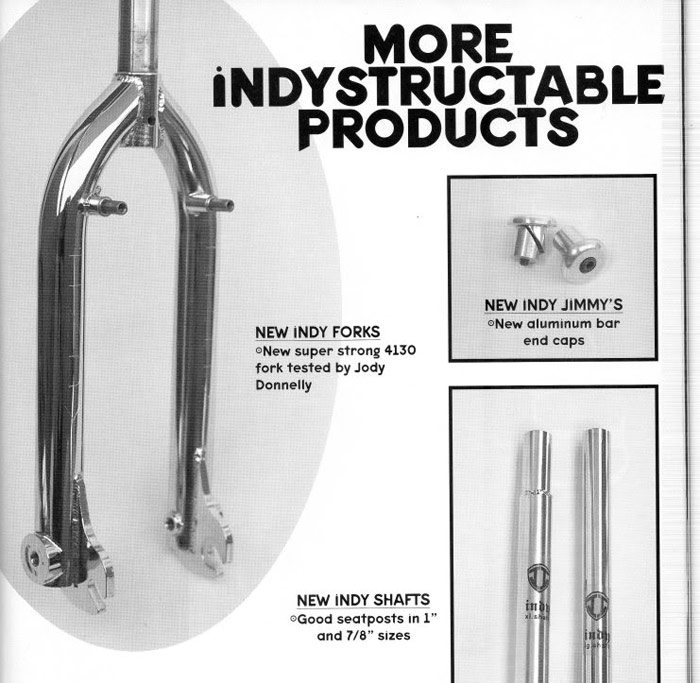
indy-industries-bmx-fork

Indy Industries Fork
Although we had never heard of these, Tom from Empire BMX suggest these bad boys for the list. Peg bosses, front brake mounts and some beefy drop outs lead us to believe this fork could take some serious abuse.

odyssey-xtro-bmx-fork-2

odyssey-xtro-fork

odyssey-xtro-hub-bmx

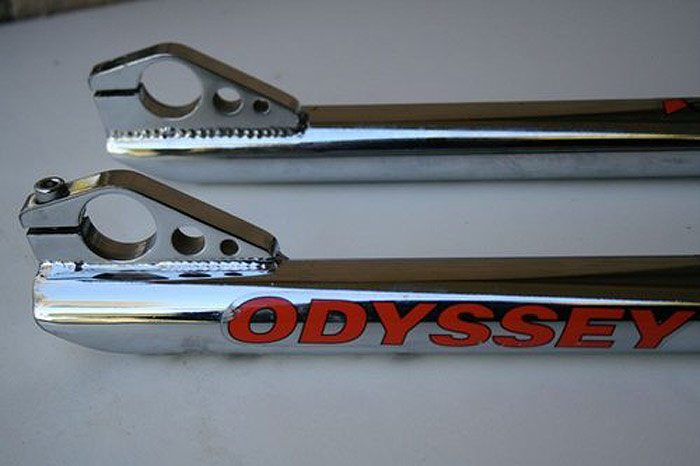
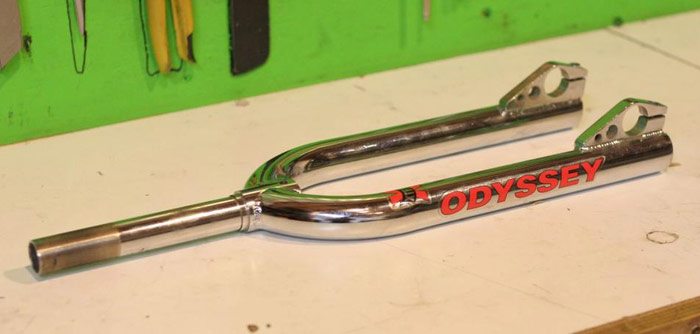
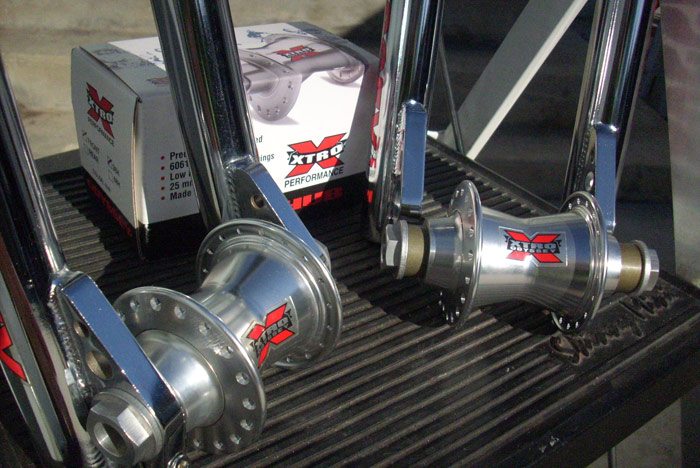
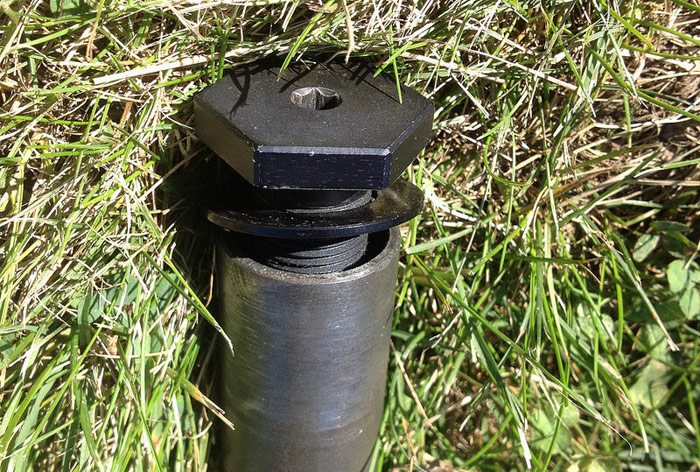
Odyssey XTRO Fork
Here’s one we meant to get in first go, but slipped through the cracks. The Odyssey XTRO fork. The first thing that will catch your eye are those crazy full drop outs with a bolt to clamp them down. Notice the drop out size? That’s because they were specifically designed for the XTRO female hub which featured an oversized axle to ensure the combination was bomb proof. drop the hub in, thread the female bolts, clamp down the fork bolts and then tighten the hub down… Can’t imagine how much this combo weighed, but it was a unique concept.

GT Pacman BMX Fork

GT Pacman BMX Fork

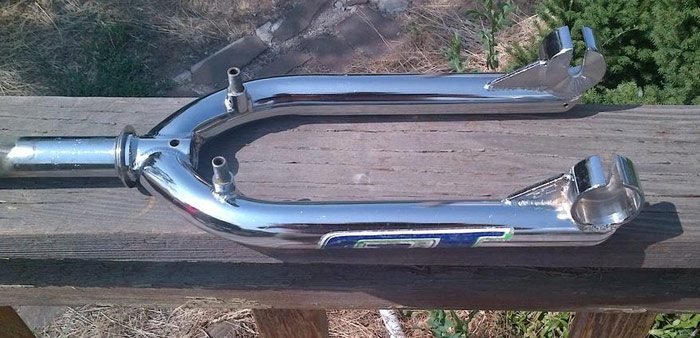
GT Pacman Fork

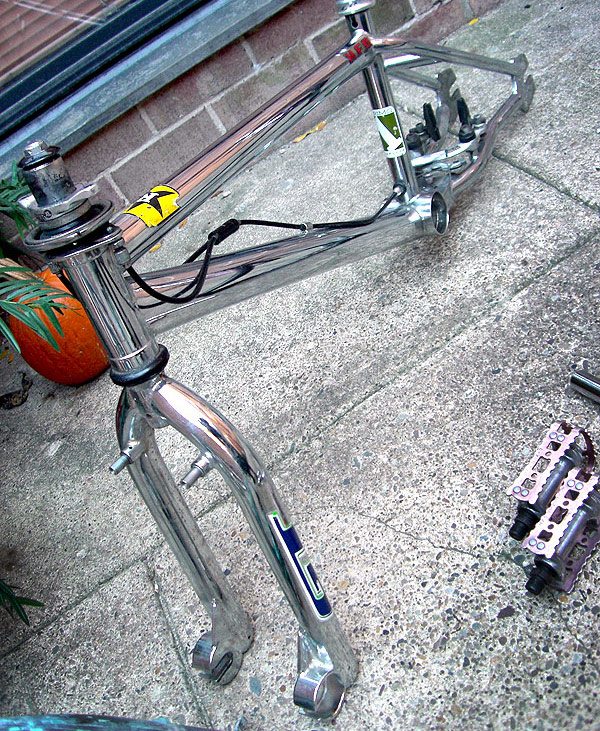
Another classic that we were reminded of was the old GT Pacman fork. Front brake mounts and big drop outs that were designed to wrap around your pegs. This would help keep the pegs from having room to bend and it would also help protect your hub a bit as well.. That is if you didn’t land on the drop outs.

Standard Bash Fork BMX

Standard Bash Fork BMX

Standard Bash Fork

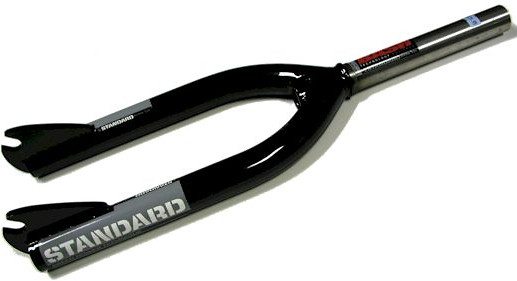
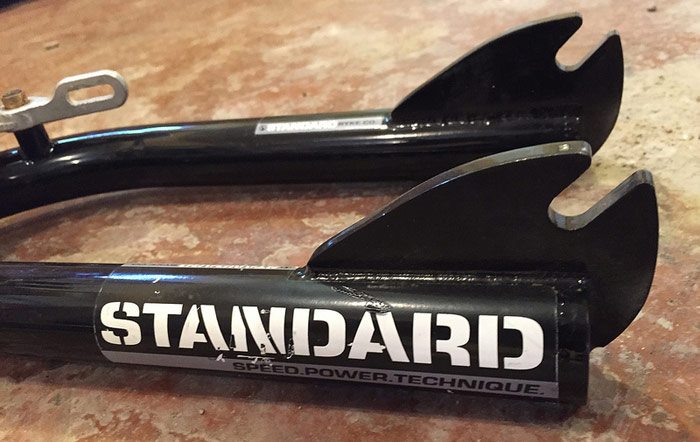
If there’s one thing Standard Bykes are known for, it’s not producing weak products. The Bash fork was designed to take some heavy abuse and was a choice fork for a lot of pros back in the day because they didn’t have to worry about them breaking. Big thick drop outs and front brake mounts… Pure beef. Made in America!

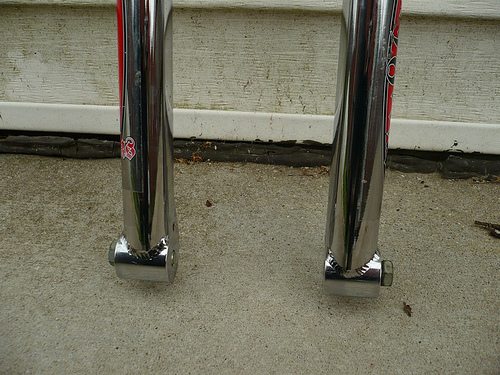
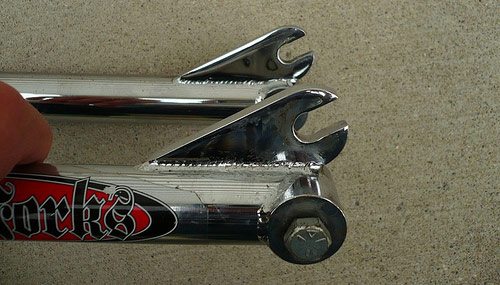
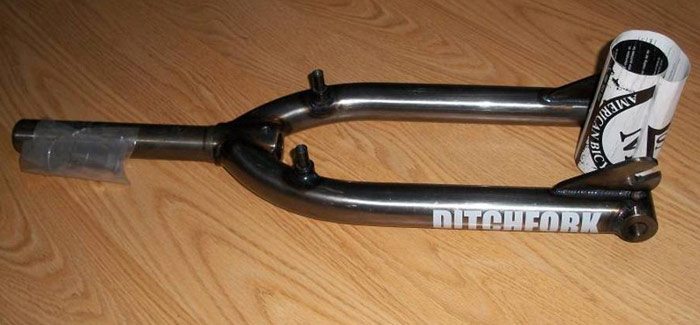
S&M Bikes Ditch Fork BMX

S&M Bikes Ditch Fork BMX

S&M Bikes Ditch Fork BMX

S&M Bikes Ditch Fork BMX

S&M Ditch Fork

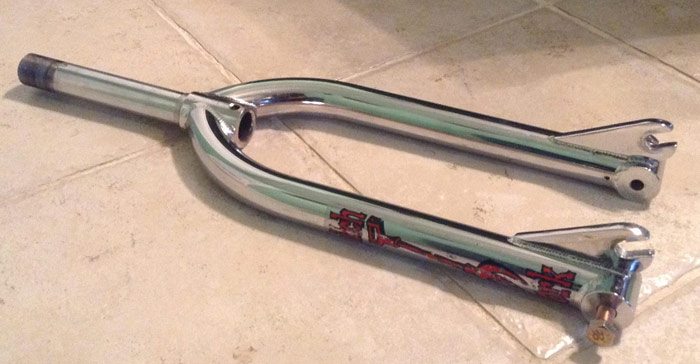
There was no way we could compile this group of classic BMX forks without including the S&M Bikes Ditch fork. These were (and still are for a few riders) the choice of most BMX riders when they came out and it’s because they were built to be indestructible. Beefy tubing, thick drop outs, fat welds, peg bosses with big 14mm bolts to keep those pegs from breaking off and a front brake mount option. Another classic made in America fork. This fork has lead to a number of revised versions like the Pitch, Pitch XLT, Fast Pitch, Widemouth and more… All carrying on the tradition of the originals.

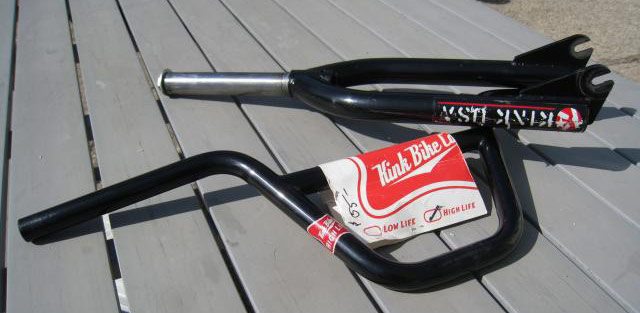
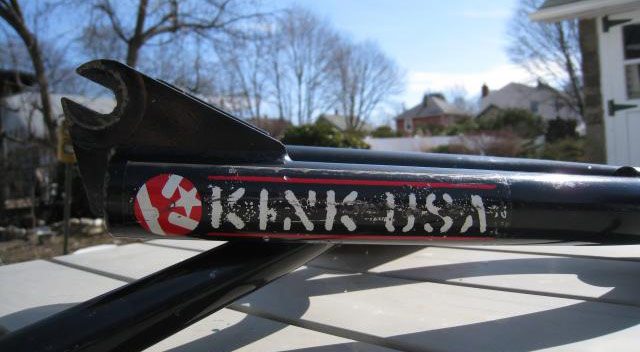
Kink Empire BMX fork

Kink Empire BMX fork

Kink Empire Fork

Kink is one of those BMX brands we love looking back on, because Zack Phillips and the rest of the crew have always been producing some dialed products since their first Empire frame and fork was released. Although they’ve had some pretty beefy products that have lead to their refined line these days, Kink have always had a good reputation from producing a product that could take some abuse since their first whack at it way back in 1998.

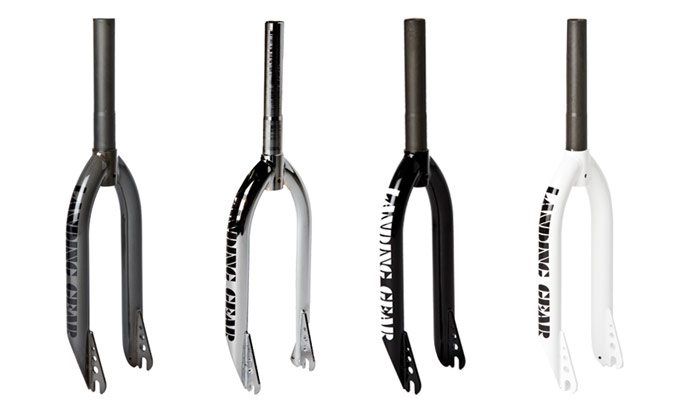
SE Bikes Landing Gear BMX fork

SE Bikes Landing Gear Fork

Here’s one we’re sure is out of order and not a photo of the originals, but that’s okay since the design has stayed pretty much the same. The SE Bikes Landing Gear fork was one of those eye catchers that featured legs with a big diameter and some crazy drop outs that were long and drilled out. These have evolved a little over the years, but SE still offer a version of them today.

terribleone-bmx-fork

Terrible One Fork

When you ride like Joe Rich and you’re always doing some really gnarly shit whether it’s huge fufanus or blasting big airs, you want to be able to trust what you’re landing on. So, Joe designed some beefy forks for Terrible One that were able to withstand the wild riding that riders were putting their bikes through at the time. There were a lot of riders that swore by these guys.

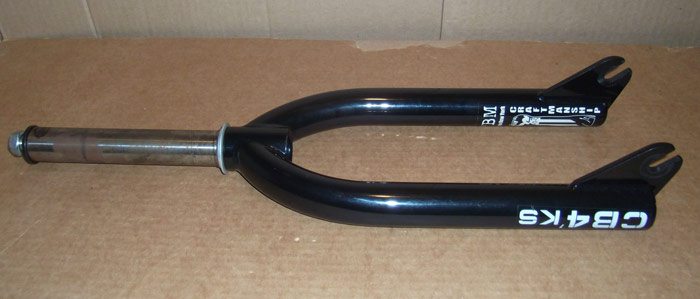
FBM BMX Fork CB4K

FBM CB4K Fork

Another American made classic. The FBM CB4K is one of those forks that quickly made the list when we were asking for suggestions for this list. Between the beefy tubing and thick drop outs, these things were built to take a pounding. FBM recently re-released these with some slight modifications to make them lighter and more current with todays trends, but still built to take a beating and made in America.

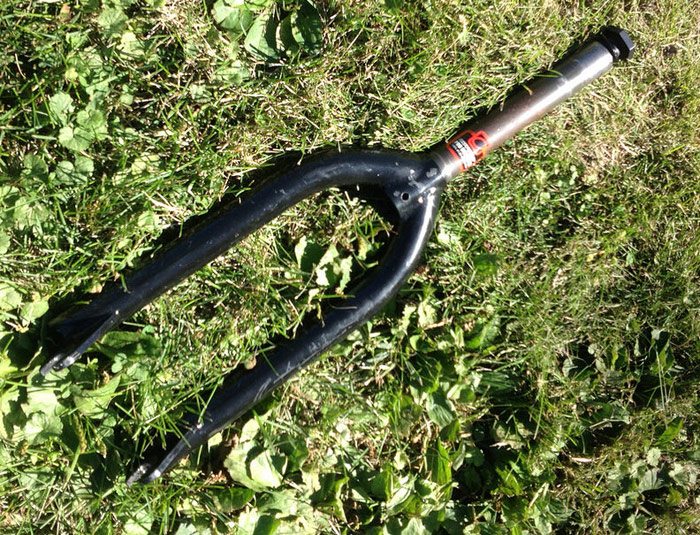
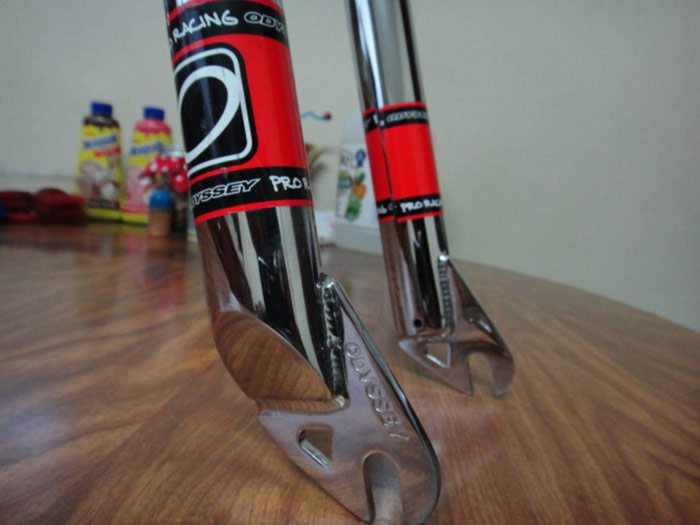
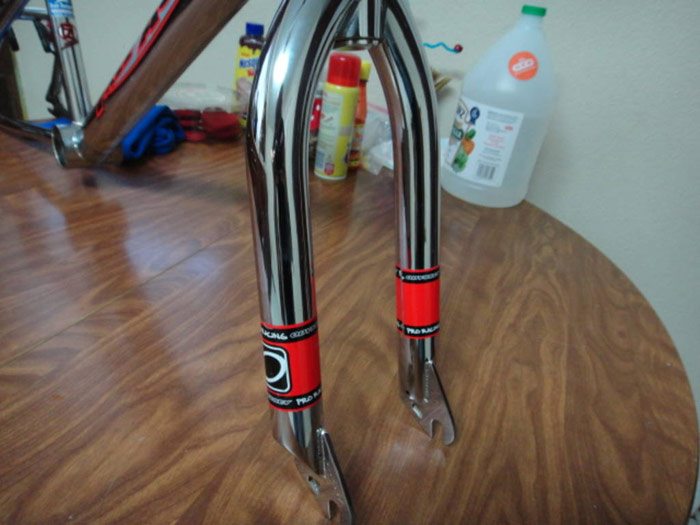
Odyssey BMX Fork
Odyssey BMX Fork
Odyssey BMX Fork
Odyssey BMX Fork

Odyssey Pro Dirt / Race / Vert Forks

Over the years, Odyssey have been known for producing some high quality, well designed products that are built to take a beating. They offer their 41-Thermal heat-treating on their forks and a lifetime warranty that backs their work. Their original Pro fork that was available in Dirt, Race and Vert versions were deemed classics that have evolved into what their current line offers today, with different offsets for each style of riding and features like front brake mounts for the vert fork and oversized tubing for the dirt fork to take that heavy abuse. I personally ran a pair of dirt forks that I bought off another rider… The only reason I switched out were for a lighter fork probably two or three years later.

Fit Shiv BMX fork

Getting even more into “current” BMX forks, we have the Fit Bike Co. Shiv fork, which was one of the earlier forks to go for a lighter design. These guys offered tapered legs, and a slimmer design that other forks at the time, which were popular among the riders trying to push the limits of lightweight on their bikes around 2008 or so.

Fly Bikes Agua Fork

Fly Bikes Agua Fork
The Fly Bikes Agua fork is another one of those that offered a few options that really caught on as time went on. The Agua fork was the first to offer Investment Cast drop outs in 2008. They also brought in the integrated cone race in 2005. Two things that we find on most BMX forks these days and they still offer on their latest version of the Agua fork that is currently available.

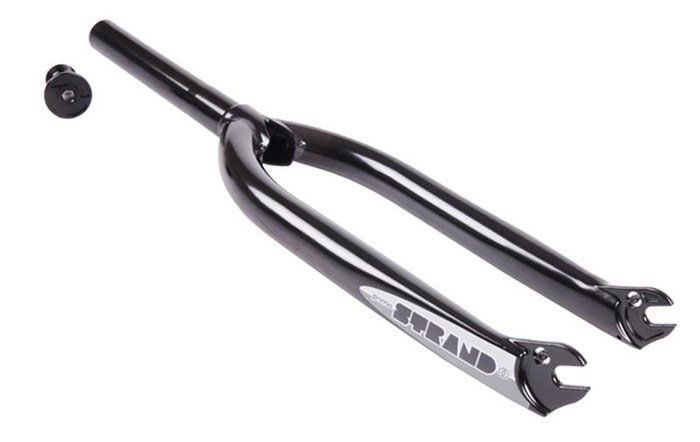
Primo Strand BMX fork

Primo Strand Fork

With street riding becoming increasingly popular and nose manuals and tricks on the front end being part of that. Primo were one of the early ones to offer minimal offset forks to help with that.

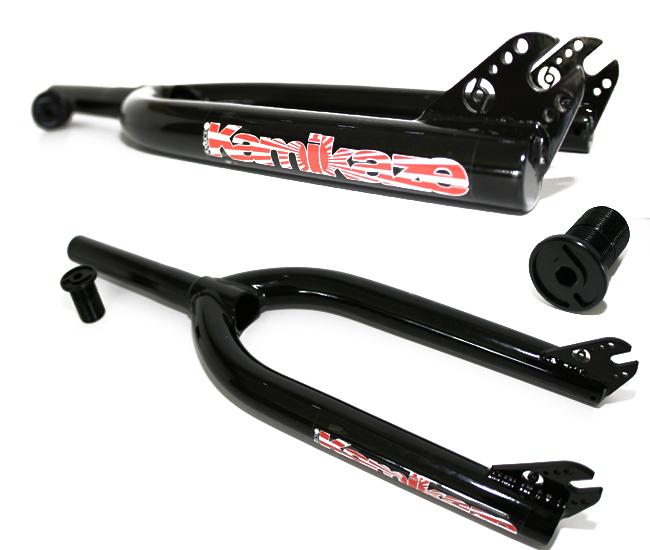
primo-kamikaze-fork-bmx

Primo Kamikaze Fork

Couldn’t resist mentioning the Primo Kamikaze fork. We’re not sure where the name came from, but based off all the holes in those drop outs that we’re sure was to help reduce added weight… We’re going to assume it was a suicide mission to dive bomb on these, haha.

odyssey-bmx-director-fork-3

odyssey-bmx-director-fork-dropout

odyssey-bmx-director-fork

Odyssey Director Fork

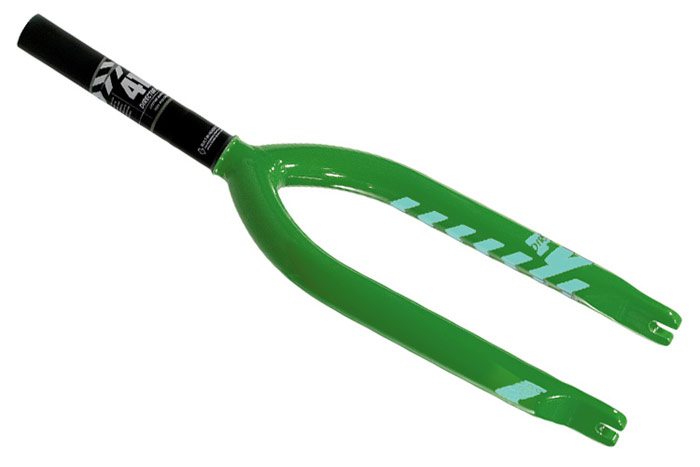
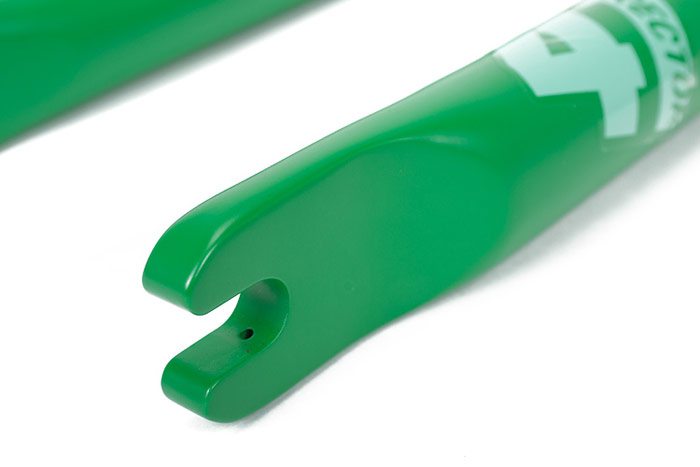
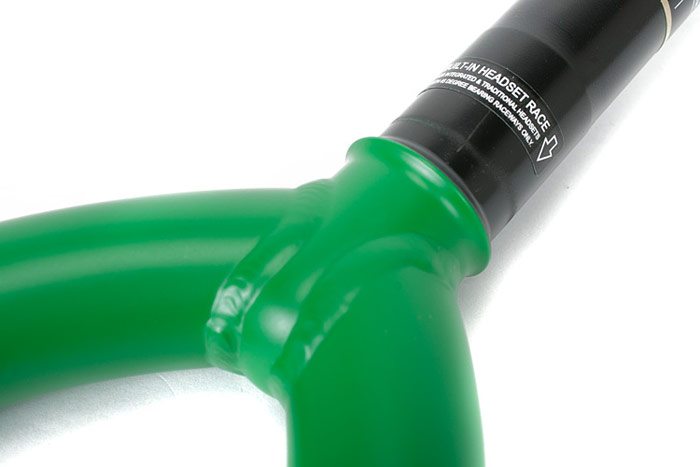
The Odyssey Director fork is one of those designs that really confused people when it first came out. The design that incorporates the dropouts into the legs, versus having them welded on as an extension, look funny, but were designed to eliminate the ability to crack or break the drop outs since impacts would be absorbed into the legs versus the drop out. The legs were bent to account for the offset, which always triggered people to say “Your fork is bent!”. It was an innovative idea, but we didn’t see any other brands take a whack at this one.

kis-sl-feather-bmx-fork
Kis Bike Co. SL Feather Fork

sm-wtf-bmx-fork
S&M Bikes – WTF Fork

shadow-conspiracy-captive-bmx-fork

Shadow Conspiracy – Captive Fork

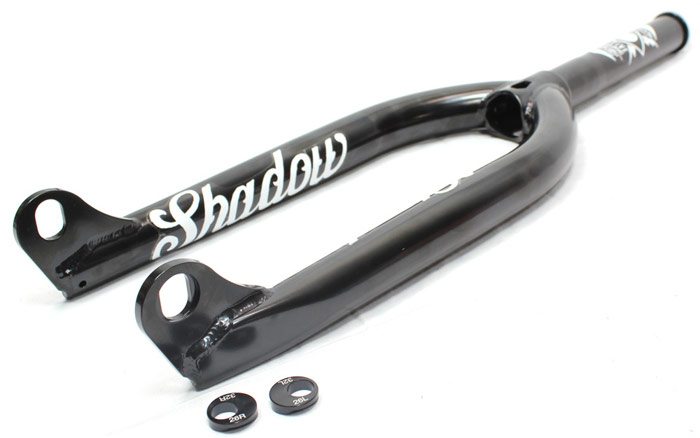
Over the years, we’ve seen a couple forks that were designed exclusively for female axles. The Kis SL Feather fork was the first to offer this unique design. S&M Bikes offered the WTF fork which was designed to match the female dropouts on their WTF frame that was sold as a kit, and then The Shadow Conspiracy’s Captive fork which featured a unique insert that allowed you to switch between two different offsets. I believe it was 26mm and 32mm. Shadow still offer their Captive fork today.

wethepeople-bmx-cream-fork

Wethepeople C.R.E.A.M Fork
When we look back on the forks we have brought up, it’s safe to say, other than the Odyssey Race fork, that most were designed with the goal of being able to handle grinding. The Andrew Jackson signature C.R.E.A.M fork from Wethepeople was designed to do the opposite. It was designed to be a pegless fork with clean investment cast drop outs that look really good.

deco-bmx-fu-fork

Deco-Zero-FuForks-tabs-n-holes

Deco Fu Fork

We’re not 100% sure, but we’re fairly certain that Chad DeGroot was the first one to offer a BMX fork with removable integrated brake mounts. Over the years we have seen a number of BMX forks with brake mounts, and even 990 plates that could be bolted on to forks, but these allowed you the option of running front brakes or not depending on how you were feeling. There was even a special hole in the back that was designed for the cable to run through it. Rad design none the less.

odyssey-bmx-r32-bmx-fork-dropouts

odyssey-bmx-r32-bmx-fork

Odyssey R32 Fork
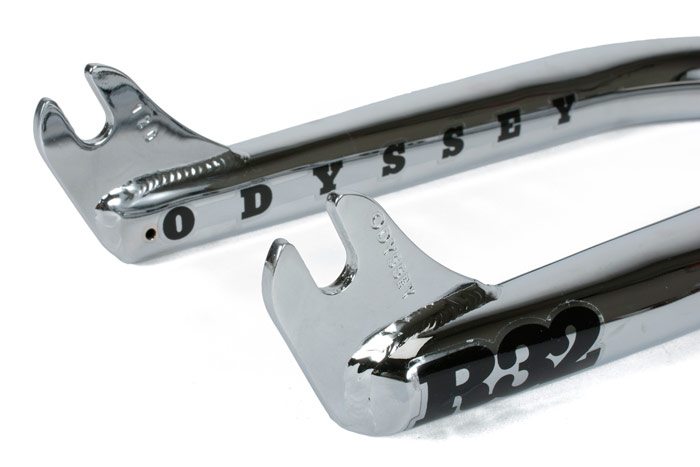
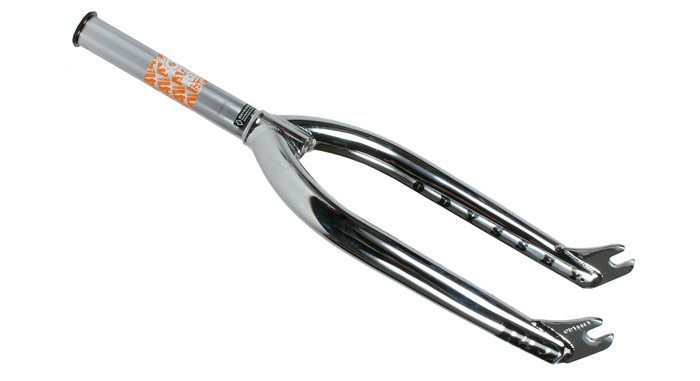
Let’s wrap things up here with a solid option that’s currently available. The Odyssey R32 (Also available in an R25 version with a 25mm offset) which features the 41-Thermal heat-treated, tapered, butted and specially formed legs, 4mm thick laser cut drop outs and a steerer tube that’s designed to take some abuse with an integrated headset race. Weight? 1 lb. 15 oz. Quite a bit lighter than some of the other options we saw above. It’s been fun watching BMX develop and get more and more dialed as time goes on with product design. There’s no denying that BMX forks have come A LONG way with design and they keep getting better.

So, we’ve seen forks come from oversized monsters with a lot of add ons that have been refined over and over again up until today. Peg bosses are no more, headset races are integrated, dropouts are much smaller, tubing is smaller, tapered, butted, and fork compression caps are threaded in versus trusting a star nut to hold it all in place. It’s pretty amazing to see all the differences lined up, isn’t it?

We know we missed a few, so let us know in the comments a few that you think should have made the list! Also, what fork do you run? How do you like it? Feel free to chime in too!

Raise the Bar: A Look At BMX Bars

November 9, 2015

sm-bikes-elevenz

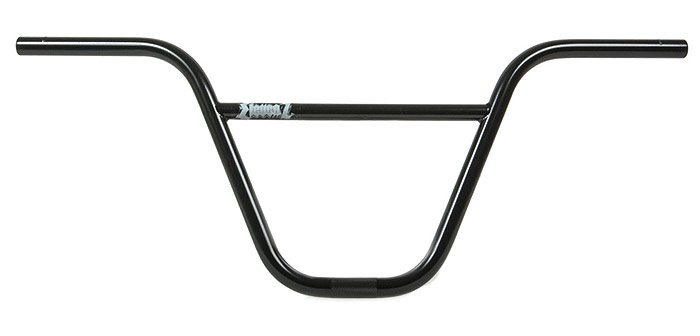
If you have been around BMX long enough, you have seen trends come and go, things get bigger, then smaller, then bigger again. At the end of the day, BMX has been working to find the perfect size that ultimately makes riding a BMX bike feel better and ride better. There’s been A LOT of trial and error over the years and we’ve seen things go from really rough and unreliable to very detailed and dialed. There’s a lot more that goes into developing a new product than drawing something up on a napkin and hoping it works… Which has happened in BMX’s fairly short existence more than once. I personally have been riding BMX for somewhere around 17 years.. You kind of lose track after a while, but it’s somewhere around there. In that time, there’s been A LOT of changes from every aspect of what makes a BMX bike. Products are very refined and it seems like we see new products with only small changes in degrees and millimeters these days that can make all the difference in how a bike can ride and in general feel, which is pretty amazing. One thing in particular that we’ve seen change A LOT over the years are handlebars. When looking at other parts of a BMX bike, it’s safe to say that bars have grown in size the most in comparison to where it was when I first picked up a bike… Let’s talk about this a little bit.

[Read more…]

Insight: BMX Frame Geometry

October 29, 2015

Let’s take a closer look at what BMX Frame Geometry is all about…

BMX Frame Geometry

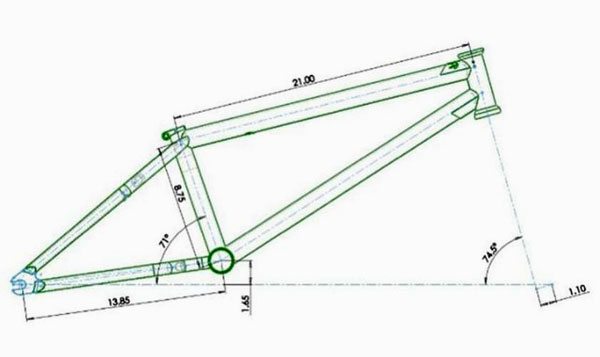
With it being the time of the year when we start seeing a bunch of new BMX Frames being released or the latest version of a previous model, we figured it would be a good time to take a closer look at what those numbers like 74.5, 13.25″ and 71 really mean, and how that can change the way your bike will feel and ride. Over the years, BMX frames have been refined over and over again to not only offer a superior product, but a frame that is truly designed for the type of riding that you are doing. Now days, it seems like we’re seeing micro adjustments to keep up with the trends or just Minor Details being added to the frames to make them stand out. If you’re considering a new frame, or just curious how the geometry of a BMX frame works… Keep reading.

Update: Here’s a video Brant Moore put together that is entirely based off this write up. If you’re more of a visual / video learner, this might be for you! Otherwise keep on reading!

BMX Frame Geometry

Top Tube Length

Top tube lengths are one of those things that we see a very wide variety of options from 20″ (sometimes smaller in the 19″ range or smaller for the 18″ and 16″ aftermarket builds) up through 21″ and even 22″. There are also 24″ and 26″ cruiser options, but let’s focus here on the 20″ range. The top tube length is the measure of the distance between the center of your head tube to the center of your seat tube. The size is generally a preference to the rider based on height and how much room they want to work with. Typically we see smaller guys in the sub and lower 5′ range working with the 20 – 20.5″ sizes, mid to upper 5′ range working with the 20.75″ range and guys from upper 5′ to 6’and up heights riding 21″ + sizes. Generally this gives you room for your legs, while giving you a proper arms reach to your bars without over extending yourself causing you to be hunched over. It’s usually pretty easy to see if a rider is on a bike that’s too big or too small for them because it doesn’t look natural. Once again, this size can be a preference. I’m about 5′ 10″ and run a 21″ top tube length. I have longer legs and arms with a shorter mid section, so I can usually go with anything from 20.75″ to 21″ without noticing too much of a change.

A longer frame can also make a bike feel more stable because your wheels will be further apart, where a shorter frame will bring the wheels closer together making it more responsive. This can also be altered by the head tube angle and chain stay length.

Head Tube Angle

The head tube angle is one of those things that we have seen change in what would seem only a small amount when it comes to BMX frame Geometry, but it has a much bigger effect on the way a BMX bike rides than you would imagine. Traditionally BMX frames are available with anywhere between a 74 to 76 degree head tube angle. With most frames falling in the 75-degree category. The angle of the head tube has changed with the trends from trails and ramp riding being the most popular to street taking over which utilizes more nose balance and a shorter distance between the wheels.

Some of you might be wondering how something like 2-degrees of change can change so much. Well, below you can find a graphic we put together showing how the angle can change things.

bmx-head-tube-angle

We based our numbers off a 315mm long fork, which is 12.4016″. We took the 12.40″ line, then rotated it 74-degrees, 75-degrees and 76-degrees. If the length of the fork was shorter, it would have less of an effect and if it was longer it would increase the distance more. On this particular one, when we rotate these lines, we get a gap of 0.41″ between the 76-degree and 74-degrees and a 0.215″ gap from either 74 or 76 to 75-degrees. 0.41″ isn’t a huge change, but would you notice a 20.59″ top tube length versus a 21″? Most likely, yes.

A steeper head tube angle (76-degrees) will bring the front wheel closer to you, making it easier to roll forward for nose manuals and front end tricks, where a mellower (74-degrees) will move the wheel further away, making it harder to roll forward on your front end for a nose manual. With the wheel being further forward, it makes your front end less twitchy and better for more gradual turning, like on trails. A steeper angle brings gap between your wheels closer together and gives the bike a more responsive feel, so turning your bars a little will do more than a mellower angle. That is why we see a lot of nose manuals and turning on the front end these days from the street guys running the steeper head tube angles.

Seat Tube Angle

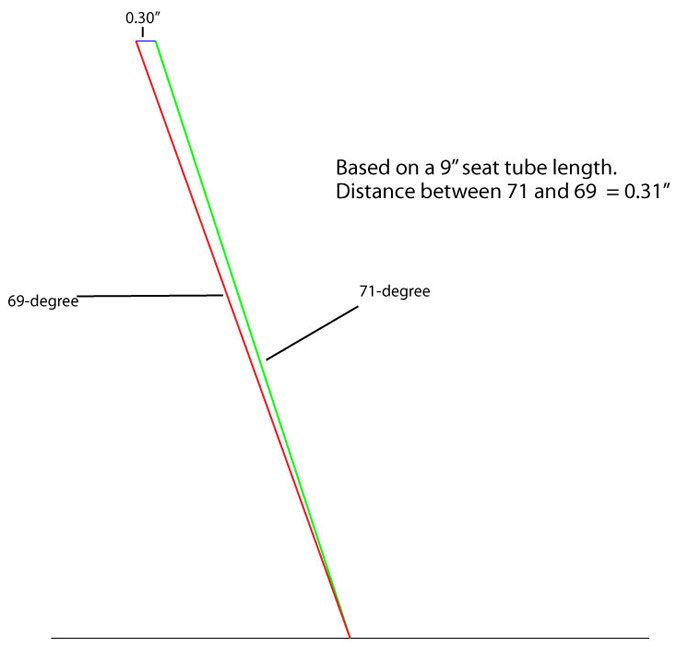
The seat tube angle is another key component on the overall feel of the frame. Traditional BMX frames use a 71-degree seat tube angle, but we have found a number of frames using a 70-degree and 69-degree angle as well. The seat tube angle can alter the overall feel of the length of the frame without changing the top tube length. For example, a 21″ top tube frame with a 71-degree seat tube angle would make it feel like a 21″ top tube frame should feel distance wise.

BMX Frame Geometry Seat Tube Angle

However, if you take a 21″ top tube frame and pair it with a 69-degree seat tube angle, the top tube length stays the same, but the angle moves the bottom bracket closer to the head tube, which makes it feel more like a 20.75 – 20.8″ frame, we give it a range because this can be effected by the seat tube height. As you can see from the drawing above, we based our numbers off a 9″ seat tube height, which is pretty standard. So from the middle of the top tube to the middle of the bottom bracket, we can see a 0.30″ difference between the two angles. That means a 69-degree angle would move your bottom bracket 0.30″ closer to the head tube. Would you notice a difference between a 21″ and a 20.69″ top tube? Most likely.

Seat Tube Height

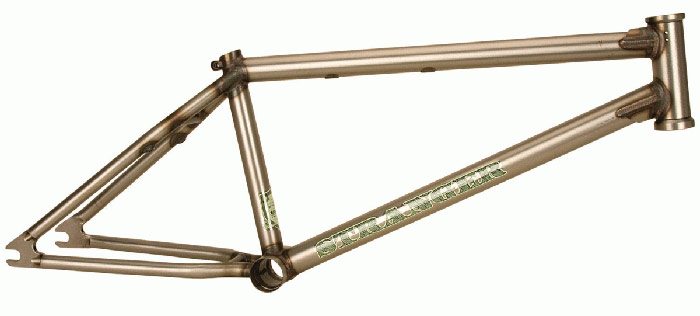
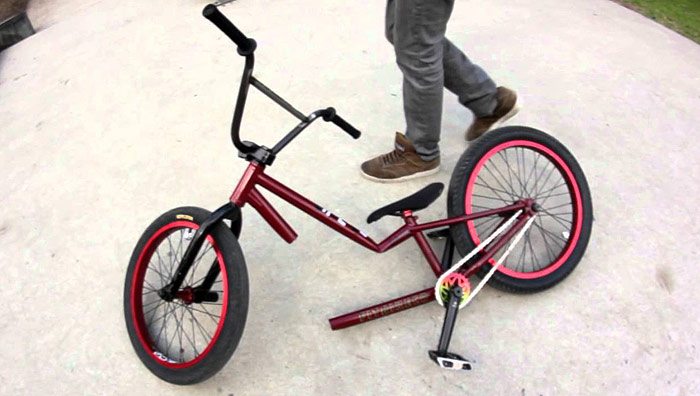
Seat tube height (Or standover height) is the vertical tube running between the top tube and bottom bracket. As we mentioned above, this tube has a 71-degree angle traditionally, but have seen frames with 70 or 69. The seat tube height brings the height of the top tube up or down. A lower seat tube height, for an extreme example, the Blackeye Killorado frame from years ago had something like a 6.35″ seat tube height will see less of a change in the feel of a top tube length by a 69-degree versus 71-degree seat tube height because we notice a bigger distance between the two angles at longer lengths, where the Stranger Quan frame with a 10″ stand over height would notice a bigger difference between a 69 and 71-degree angle (the frame has a 70-degree angle). Not only does the height alter the look for the frame, as you can see from the very low slung Killorado frame below, some riders say a lower seat tube height makes tailwhips easier, where a taller seat tube height which benefits from knees pinching the seat make barspins easier. This is mostly a personal preference, but the seat tube angle can alter the feel of the bike as well which is why watching both the seat tube height and angle are are important.

BMX Frame Geometry
BMX Frame Geometry
Talk about polar opposites. Blackeye Killorado with a 6.35″ standover and the Stranger Quan frame with a 10″ standover.

Bottom Bracket Height

Bottom bracket height is based off the 20″ diameter of BMX wheels and the height that the bottom bracket sits above the center of the drop outs. From the center of the drop outs to the bottom of a 20″ wheel is 10″. So, raising or lowering the bottom bracket height changes how high it sits from the bottom. Most frames range from the 11.5″ to 11.75″ range, with a few lower or higher. The height can alter the overall feel of the bike. A lower bottom bracket gives you a more stable feel and can almost make the bike feel slower, where a higher bottom bracket can make it more twitchy and easier to spin. Another thing to consider is that bottom bracket height can also be altered by tire size. 2.40″ knobby trails tires will lift you up a little more than a 2.35″ slick street tire for example.

Chain stay length

Chain stay length is one measurement we see a big range that is dependent on the style of riding when it comes to BMX frame geometry. The ALVX frame from BSD features a VERY short 12.5″ chain stay length, where a trails frame like the Fit Hartbreaker frame can go as much as 14.5″. This distance can alter the distance between the wheels which can make the bike feel more stable (further apart) for trails guys or more aggressive (closer together) for the street guys. A shorter back end will make it easier for manuals and hopping, where the longer back end will make it harder to loop out and easier to keep the bike under you when jumping. This is more or less a preference on how you like to ride. Going in the middle will give you a good balance between the two which can be ideal for the guys who like riding ramps or like to ride street, trails and ramps.

So, that about wraps things up for how BMX frame geometry works. With so many frames to choose from, there’s a good chance you are able to find all the different features that work for how you like to ride. Whether it’s a steep head tube angle, short top tube and medium length chain stay with a higher bottom bracket to a mellower head tube with a longer top tube, lower bottom bracket and longer chain stay length. Those little numbers can make a big difference.

Check out these BMX FRAMES

Questions? Comments? Are we wrong about anything? Let us know in the comments below.

VISIT: FRONT PAGE // DAILY SECTION // BMX COLOR APP // BMX VIDEOS // RANDOM // BMX Games
  • « Previous Page
  • 1
  • 2
  • 3
  • 4
  • 5
  • …
  • 84
  • Next Page »
Home
Daily BMX Videos & News
BMX Color App
BMX Spoke Calculator
Submissions
Advertise
What Is BMX? What Does It Mean?
What Does A Warranty Cover?
BMX Frame Geometry Guide
BMX Handlebar Geometry Guide
BMX Tool Guide
BMX Multi-Tool Guide
BMX Frame and Parts Guide
5 Keys To Keeping Your BMX Bike Dialed
Rad - Full Movie
Privacy Policy
Affiliate Disclosure
Join Our Email List
Affiliates & Supporters
Vans
Etnies
Dan's Comp
Life Brand
Note: This site contains affiliate links and we could receive a small commission that supports this site if you were to make a purchase on their websites using our links for no extra charge to you.

Copyright © 2025 · BMX UNION - All Rights Are Reserved.

pixel