BMX UNION

The latest BMX Videos, Products and News!

  • BMX Videos & News
  • BMX Color App
  • Submissions
  • Home
  • Spoke Calculator
  • Products
    • BMX Frames
    • BMX Bars
    • BMX Fork
    • BMX Stem
    • BMX Grips
    • BMX Headset
    • BMX Cranks
    • BMX Pedals
    • BMX Sprocket
    • BMX Chain
    • BMX Bottom Bracket
    • BMX Seat
    • BMX Seat Post
    • BMX Hubs
    • BMX Rims
    • BMX Tires
    • BMX Pegs
    • BMX Hub Guard
  • Featured
    • Interviews
    • Bike Check
    • BMX Videos
    • Photogalleries
    • BMX Reviews
    • On the Horizon
    • Through The Lens

How BMX Handlebars Are Tested

April 27, 2016

Have you ever wondered how BMX Bars are tested?… Other than guys sending it down huge stair sets, over massive doubles or by blasting quarter pipes… Well, Odyssey released this quick video giving you a look at how they test their bars against a few competitors. Odyssey have put a lot of faith in the quality of their product thanks to their 41Thermal heat-treating process that gives them a lifetime guarantee so these tests must be pretty effective to figure out just how to make a strong handlebar! Take a peek!

Does anyone else geek out over videos like this or is it just us?

“As part of our mission to make the best BMX parts possible, we continue to refine the 41-Thermal® process at all stages of manufacturing. Each step in the process is held under strict scrutiny, and we continue to examine the strength and durability of all our parts.

In our previous Stampy tests, we have blown away the industry standard “EN tests” for forks and cranks, and now it’s time to take a look at handlebars. In our latest test, we have taken bars with very similar height, width, and sweep dimensions, and tried to replicate a lifetime of nose-diving into the ground and pulling up on the bars for a sprint to gain speed in a confined space.

The Stampy handlebar rig drives down on the grip sections right where your hands would be with 1000N (that is about 225 pounds of force) per side, and then pulls back up with another 1000N (225lb). It drives down at a 45 degree angle, just like you would in real life. However, unlike a real rider, the Stampy rig can do this 18,000 times per hour, for as long as it takes to break the handlebar. To get an idea of what that’s like, you can fill a backpack with bricks until you weigh 225 pounds and then attempt to do 30,000 one-arm push-ups, and 30,000 one-arm pull-ups.

As expected, when we tested our bars against our competitor’s bars that had similar geometry, we outperformed them once again. Our worst bar was 33% better than the best of the rest, and our best bar was over 400% more durable than the worst. So remember, when you are buying bars, although they may look very similar, they are not all “the same”.

When you see how hard we push to make the best parts; to make them better and better every chance we get, it is easy to understand why our legendary lifetime warranty against bending and breaking is still around 17 years after we first introduced it. And when you see the contrast between our bars and our competitors, you can also quickly see why most of their warranties have long since been quietly canceled or modified with complicated terms and conditions that usually limit the warranty to manufacturing defects alone.”

[Read more…]

Odyssey – Graduate Peg Promo Featuring Broc Raiford

April 14, 2016

Odyssey dropped this short but sweet promo video featuring Broc Raiford putting their new Graduate Pegs to good use! Hit that play button for two real solid clips and some of the details on the pegs.

If you want a better look and to get all the details on the pegs click here!
[Read more…]

Justin Spriet Bike Check

April 11, 2016

Odyssey have just released this new Bike Check with Justin Spriet and his current setup, which includes a prototype sample of the “Thankyou” frame that Fit Bike Co. are working with Justin on. Although this beast has some wear and tear, it definitely looks like a sturdy unit to us! Hit the flipbook above to take a closer look at this BMX bike. Full parts list below!
[Read more…]

Product: Odyssey – 49er Four Piece Bars

March 30, 2016

odyssey-bmx-49er-bars-black-700x

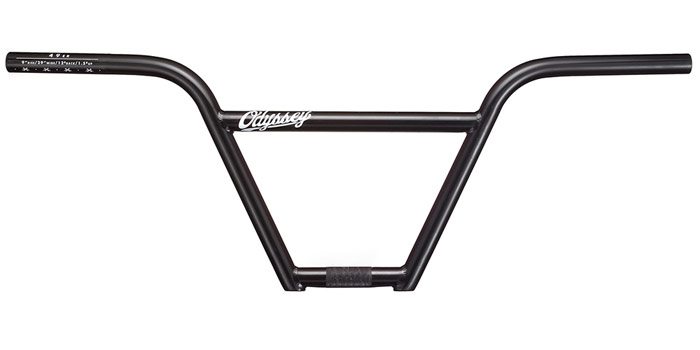
We first caught wind of the four piece bars that Odyssey have been working on back in September during Interbike 2015. Now, we get a look at their brand new 49er bars that are available now. These bars are made from multi-butted 4130 chromoly with a butted 7/8″ crossbar, large radius bends for additional strength, welded end caps to help reduce flex and a post-weld heat-treatment for even more strength. The 49er bars come with a 9″ rise, 29″ width, 12-degrees of backsweep and 1.5-degrees of upsweep.

These bars are available through BMX shops and mail-orders that carry Odyssey worldwide now in black only.

More details below…

[Read more…]

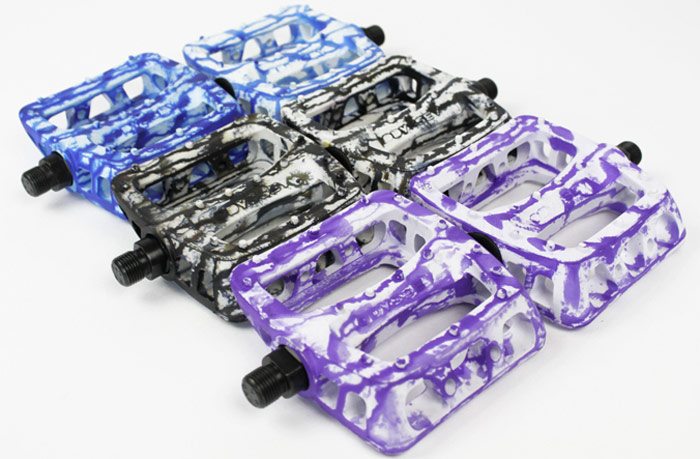
Product: Odyssey – Limited Edition Tie Dye Twisted PC Pedals

March 23, 2016

odyssey-bmx-twisted-pc-pedals-tie-dye-colors

It looks like Odyssey have released their latest limited edition color option for their classic Twisted PC pedals! They have just released a limited edition run of these blue, black and purple tie dye pedals to dealers worldwide and they look real good. We’re not sure if they’re trying to let these out under the radar because Odyssey’s website and social media channels haven’t mentioned them… yet.. But there’s a number of shops and distributors around the world that have posted up photos, so we know they’re available now. Hit up your favorite BMX shop and mail-order that carry Odyssey and tell them you want ’em before they’re gone!

More photos below
[Read more…]

Product: Odyssey – Graduate Peg

March 18, 2016

Let’s take a closer look at the Odyssey Graduate Peg!

Odyssey BMX Graduate Peg

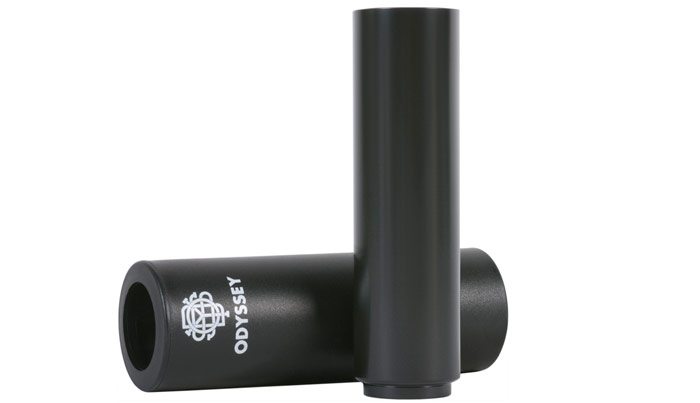
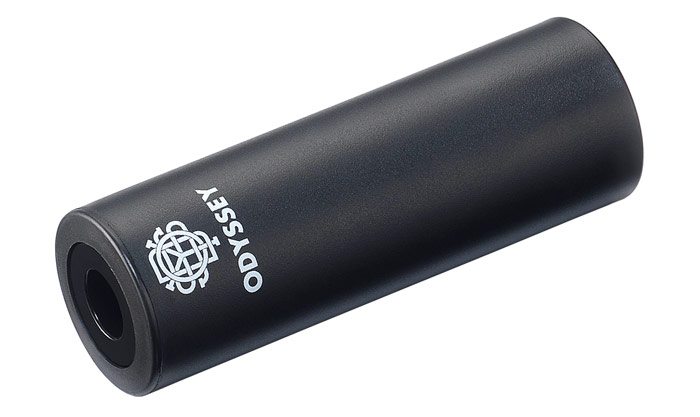
On the hunt for some new pegs? It looks like Odyssey have released their new Graduate plastic pegs for you to get your hands on. The peg is pretty standard with a plastic sleeve with a 4130 chromoly core and a printed Odyssey logo. It comes in 4.5″ length with a 1.5″ outside diameter (38mm) for size and a weight of 4.5 oz. per peg. The Graduate peg also has replacement sleeves available so you can swap them out once you had worn the existing sleeve down. Hit up your favorite BMX shop or mail-order that carries Odyssey to get some today.


Odyssey BMX Graduate Peg

Check out more from Odyssey!

We want to hear from you! Let us know what you think in the comments below!

VISIT: FRONT PAGE // DAILY SECTION // BMX COLOR APP // BMX VIDEOS // RANDOM

Let’s Talk About BMX Handlebars and Geometry

March 17, 2016

bmx-handlebar-geometry

Last night, we posted up a photo on our Facebook page asking if you guys preferred two piece or four piece bars. After we posted it up, it got us thinking about BMX Bars in general and the geometry. We figured maybe it would be a good time to talk about some of the details, terms and just what kind of differences you can find in handlebars. Although you might see a few degrees of difference, it can actually make quite a bit of difference. Let’s talk about this.

Update:

If you’re more of a video learner, Brant Moore put together a video based off this article for you to learn about BMX Handlebar Geometry…

odyssey-bmx-lumberjack-xl-handlebars
shadow-conspiracy-crow-bars-bmx

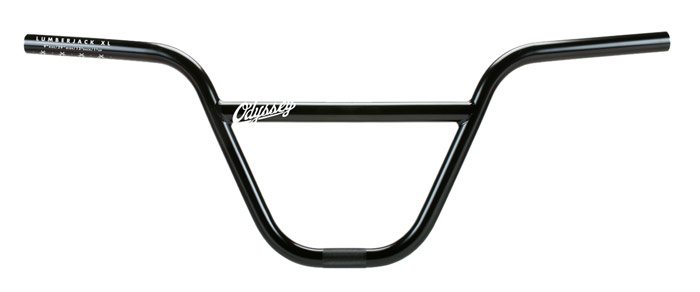
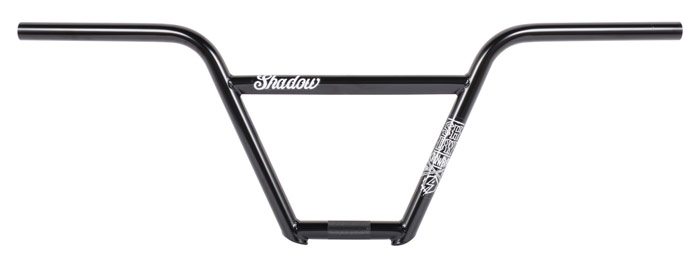
Above are the Odyssey Lumberjack XL and The Shadow Conspiracy‘s new Johnny Devlin signature Crow bars. Looking about both bars, it’s obvious they’re different and they both have different geometries.

Odyssey’s Lumberjack XL bars are made from multi-butted 41-Thermal heat-treated chromoly with a 9″ rise, 29″ width, 1-degree of upsweep and 12-degrees of backsweep with a weight of 33 oz.

The Shadow Conspiracy Crow bars are made from 13-butted 4130 chromoly with a 100% post-weld heat-treatment with an 8.7″ or 9.1″ rise, 29″ width, 3-degrees of upsweep, 12-degrees of backsweep and a weight of 28.2 oz for the 8.7″ rise size. These bars also feature a tear shaped crossbar.

So, looking at both bars, they have some similarities and some differences. Let’s really look at this in detail.

Two Versus Four Piece Bars
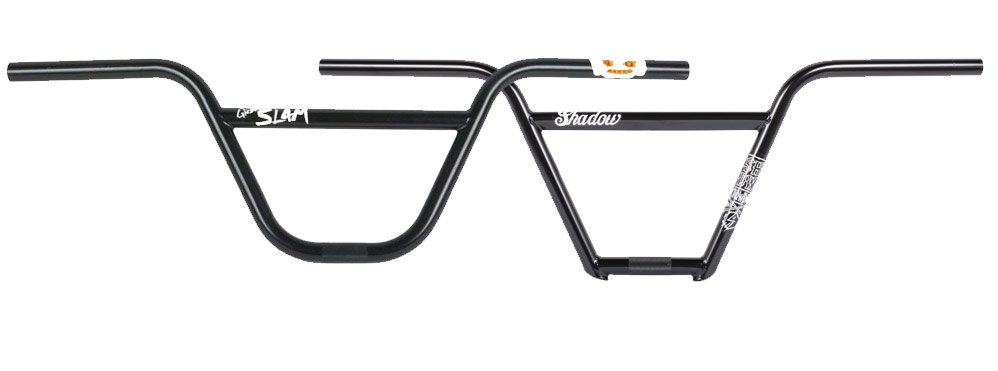
Let’s start out with the obvious… One is two-piece (two separate tubes) and one is four-piece (four separate tubes). For those of you who aren’t understanding, the Odyssey bars (top) only use two tubes. One long tube that bends to the shape with one cross bar to help keep the bars stiff and rigid. The Shadow Conspiracy bars (bottom) are four-piece. They both sides have a separate tube, with two cross bars holding them together.

What does this mean? Well, for the most part it’s more of a look thing over anything else. You could argue that two-piece bars are stronger than four-piece bars because there are fewer welds. Fewer welds mean fewer spots where cracks and breaking technically could happen. Not to say we have never seen bars sheer off in the middle of a tube, because that can happen – usually because the tubing was too thin or low quality chromoly – but 9 times out of 10 we’ll see bars break on the bend just beyond the grips at the weld with the top crossbar because this is where a good portion of the pressures from riding land before distributing throughout the rest of the bars. We have even seen handlebars snap where the stem clamps down on the tubing, which could be because of poor quality or the stem being over tightened causing excessive stress. Beyond that, there aren’t really any huge advantages or disadvantages to running two over four piece bars. Well, you might get some additional street cred if you run four-piece bars, haha.

4130 Chromoly VS. Hi-Ten Steel
It’s pretty common to see low end complete BMX bikes come with Hi-Ten steel versus 4130 chromoly (both are steel, just difference in quality, strength, weight). But, for the most part, BMX handlebars and most of your bike are made from 4130 (sometimes 4140) chromoly tubing. 4130 is much stronger than Hi-Ten, which allows you to use thinner tubing to save some weight and still be stronger. You can learn more about 4130 Chromoly here – What Is 4130 Chromoly

Heat-Treating
Both of the bars we used for an example above happen to be heat-treated. Heat-treatment is a process done to chromoly to alter its properties that can change hardness, strength, toughness, ductility and elasticity in the material. Ultimately, the process can make it stronger (sometimes weaker if done improperly) and hold up better to the levels of stress and abuse that BMX puts on the material. Odyssey have their patented 41-Thermal process that comes with a lifetime guarantee against bending and breaking which is a pretty clear indicator that they put a lot of trust in what their heat-treatment process does to increase the overall strength. Want to learn more about heat-treatment? What Is Heat-Treating

flybikes-bmx-handle-bar-butting

Butting
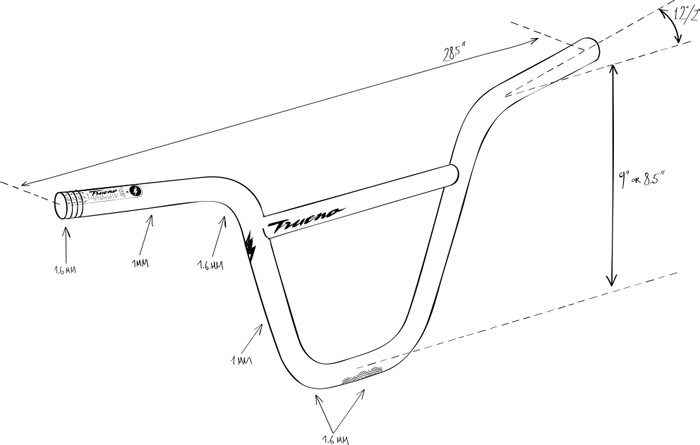
Butting is another one of those terms we see in BMX handlebars a lot. Butting is a process that makes the tubing used thicker in some places that take on more stress, such as bends, and thinner in areas that are less likely to bend or break like the middle of a tube. Fly Bikes have some great graphics on their website showing where they have placed butting on their handlebars (and frames). As you can see from the graphic above, there’s multiple spots where they have made the tubing 1.6mm thick versus 1mm thick. This allows for that extra strength on the high stress points (bends and ends of tubing) and where it can be thinner to save a little weight.

odyssey-bmx-lumberjack-xl-handlebars-rise-width

Rise and Width
Rise and Width is one of those things that we have seen A LOT of change in over the years. The width and height have both increased a couple of inches each. We actually put together something about that not too long ago – Raise the Bar: A Look at BMX Bars – that looked at how much bars have grown in the past decade. But, that’s another topic.

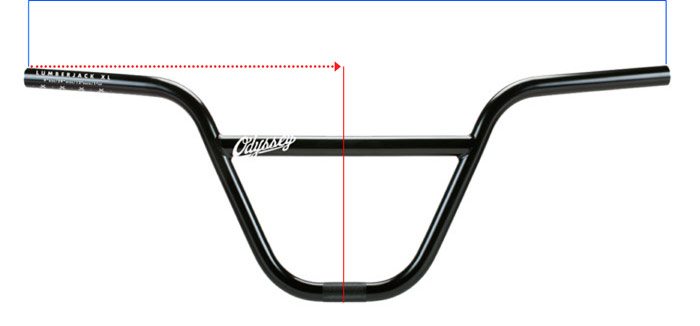
The Rise of the bars are the height from the bottom of the bars at the center where the knurling is, to the highest point of the bars. With upsweep, it’s the very ends of the bars. We’ve explained that in the graphic about with the red lines. When it comes to rise, this is more of less a personal preference over anything else. We typically see taller riders using higher rise bars to help keep them from hunching over, making for a more comfortable ride. But, we also see a lot of smaller riders riding big bars because they are also comfortable and some feel it can help increase leverage when it comes to bunnyhopping. However, we still feel anything beyond 10″ is excessive, haha.

The Width is the measurement straight across from one end of the bars to the other, outlined in the blue. Most bars these days offer between 28″ and 30″ of width. Many of which end up cutting a quarter of an inch to a half inch off just because they prefer to run their hands closer to the inside of the grips and bends. Traditionally, you would want your bars to be about the width of your shoulders, so in reality, 28″ is about right for most people, but there are bigger riders out there that can utilize the 30″. Similar to height, width is also a personal preference as to what feels right. Just remember before you go hacking your bars down, it’s easier to make your bars narrower than it is to make them wider… So, make sure you’re 100% sure before you trim.

Upsweep and Backsweep
Upsweep and backsweep are two things that are ultimately a personal preference over anything else. But first, let’s talk about what these terms mean. Upsweep is the amount that the bars bend upward from the top bend to the outside of the bars. We see some flatland bars coming with 0-degrees of upsweep and we see some with 4-degrees of upsweep. It doesn’t seem like much, but those few degrees can really be felt in your wrists. For example, I personally picked up a pair of Gary Young bars that had 4-degrees of upsweep and my wrists were not having it. I currently run Fly Bikes Montaña bars with 1.5-degrees of upsweep and I don’t have the pain that 4-degrees gave me. It’s a bummer because I really wanted those Gary Young bars, because Gary kicks ass, haha.

Backsweep is how much the bars bend back from center. So, when you look at your crossbar, that has zero degrees of backsweep and that line across would be center. If your bars had zero degrees of backsweep, they would line up all the way across from end to end. The backsweep helps with control and also makes it so you sit a little bit behind the bars when you’re pulling up versus standing directly over the bars. If you had negative sweep, or front sweep (which as far as we know doesn’t exist), your bars would pull you forward more and your wrists would turn your hands inward, making it harder to pull up and ultimately control your bike. The amount of backsweep is also a personal preference. I can’t recall ever having an issue with pain or anything due to backsweep, but I’d be willing to bet somebody out there has.

Tear Shaped Crossbar
So, if you recall way back at the beginning when we were talking specs and details of the two sets of bars, you might recall that the Crowbars (4-piece) have a tear shaped crossbar. What does that mean? Well, it’s more of an aesthetic thing than anything else. The tubing isn’t round, it’s round on top and pinches inward toward the other side, similar to what a drop of water would look like. There really isn’t any huge benefit to it as far as strength or anything else goes, but it looks cool. Over the years we’ve seen a number of brands offer different crossbars. A few examples would be the Nowear Candybars that feature a v shaped crossbar, similar to the old Sergio Layos signature Pantera bars back in the day, Macneil‘s old Silencer bars featured drilled holes in the ends of the bars, which were not quite sure how well that worked out, but it looked cool and saved a little weight, and Stolen have their Deviant bars with the Vortex crossbar.

macneil-bmx-silencer-bars

Macneil Silencer Bars

nowear-bmx-candybars

Nowear Candybars

stolen-bmx-deviant-8.5-Raw-bars

Stolen Deviant bars.

So, that about wraps things up. When it comes down to it, BMX handlebars are more or less personal preference to what you feel comfortable with. Big, small, wide, narrow, no upsweep, a lot of upsweep, more backsweep or less… It’s all about finding that right combination that feels good and you think looks good. So, what do you prefer? Do you have any questions? Let us know what you’re thinking in the comments below!

Product: Odyssey – Pursuit Grips

March 10, 2016

odyssey-bmx-pursuit-grip-black

On the hunt for some new BMX grips? Here’s a look at the Odyssey Pursuit grips that are available for you to get your hands on now. These grips 155mm long, come with a wavy horizontal ribbing pattern and a thin overall feel. They’re available in colors of black, gum and grey and come with matching Par Ends through BMX shops and mail-orders that carry Odyssey BMX worldwide now!

“Our Pursuit grip feature wavy horizontal ribbing and other design cues to mimic how people usually wear their grips in. A textured section at the outer end allows for a very comfortable feel overall. The flat part of the grip takes its inspiration from our Pursuit’s popular tire tread and the whole grip feels thin overall.”

View more photos below…

[Read more…]

  • « Previous Page
  • 1
  • …
  • 29
  • 30
  • 31
  • 32
  • 33
  • …
  • 89
  • Next Page »
Home
Daily BMX Videos & News
BMX Color App
BMX Spoke Calculator
Submissions
Advertise
What Is BMX? What Does It Mean?
What Does A Warranty Cover?
BMX Frame Geometry Guide
BMX Handlebar Geometry Guide
BMX Tool Guide
BMX Multi-Tool Guide
BMX Frame and Parts Guide
5 Keys To Keeping Your BMX Bike Dialed
Rad - Full Movie
Privacy Policy
Affiliate Disclosure
Join Our Email List
Affiliates & Supporters
Vans
Etnies
Dan's Comp
Life Brand
Note: This site contains affiliate links and we could receive a small commission that supports this site if you were to make a purchase on their websites using our links for no extra charge to you.

Copyright © 2026 · BMX UNION - All Rights Are Reserved.