BMX UNION

The latest BMX Videos, Products and News!

  • BMX Videos & News
  • BMX Color App
  • Submissions
  • Home
  • Spoke Calculator
  • Products
    • BMX Frames
    • BMX Bars
    • BMX Fork
    • BMX Stem
    • BMX Grips
    • BMX Headset
    • BMX Cranks
    • BMX Pedals
    • BMX Sprocket
    • BMX Chain
    • BMX Bottom Bracket
    • BMX Seat
    • BMX Seat Post
    • BMX Hubs
    • BMX Rims
    • BMX Tires
    • BMX Pegs
    • BMX Hub Guard
  • Featured
    • Interviews
    • Bike Check
    • BMX Videos
    • Photogalleries
    • BMX Reviews
    • On the Horizon
    • Through The Lens

The ROG Community – Beyond the Barriers

June 27, 2016

lithuania-bmx-rog-skatepark-crew-2

Words and Photos by Tyrone Kelly

I recently wrote an article titled ‘The Slovenian Scene Report’ on BMX UNION. Reading that before this may just help you to gain more of an insight and help provide a little more context for this article, however I will try to be thorough enough for you and I to be on the same page.

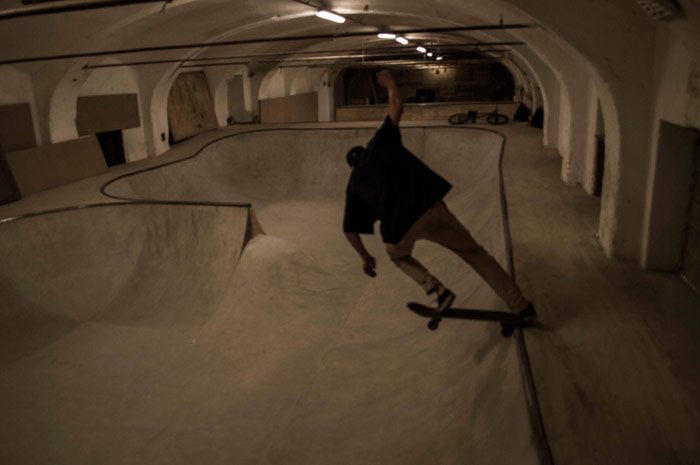
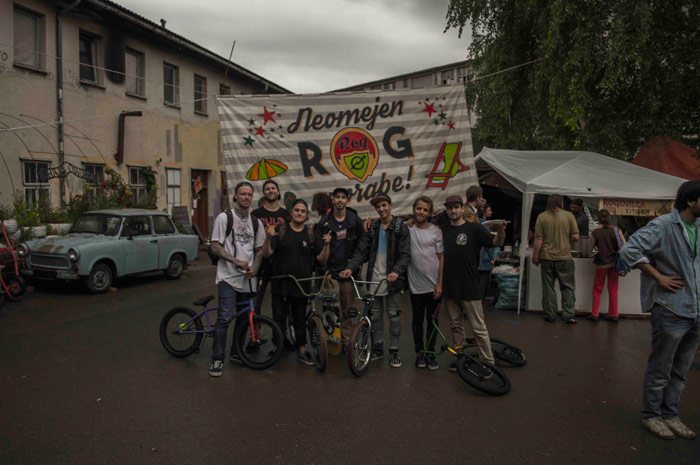
On a previous trip to Ljubljana, Slovenia I fell in love with the BMX scene there, the utter dedication to their sport is unrivaled. When it comes to DIY spots, Skatepark ROG is most certainly the best one ever built. Not only is the park incredible, it is built in a place of historical importance for Ljubljana. The skatepark is built in a building that was once an old bicycle factory, the brand was called ROG – fortunately for us though, the company went bankrupt and the building was abandoned.

lithuania-bmx-rog-skatepark-bmx-bikes
lithuania-bmx-rog-skatepark-graffiti
slovenia-bmx-rog-yard

Shortly after, it became inhabited by some young creative souls that found a place they could call their own, something to be proud of and something to build upon. On my previous trip there I was rather inquisitive as to how they had never been evicted, as essentially the 100 inhabitants of the building are technically squatting. Rok Simsíc informed me that every year they say they will be building something new and that they need to leave but nothing has ever happened, at least not until now.

Unfortunately, ROG is currently under duress. I am no politician and my sources are that of the members of the community and some Google translated articles about what the political sphere is currently like in Ljubljana.
lithuania-bmx-rog-skatepark-alley

As it seems, a large amount of money has come Ljubljana’s way compliments of the EU. Sounds great, but the target for investing these funds is into building a creative center ‘as an experiment’ to see how a center could benefit the youth. It makes no sense to me at all, especially since ROG has already done that, the community there is not only built around a skatepark.

It is an all-encompassing center of creativity, community and learning. Various people, artists, musicians, studios and living spaces inhabit ROG. They provide free lessons to educate the youth within the area; they support refugees as well as the rest of the community by providing not only education but food too.
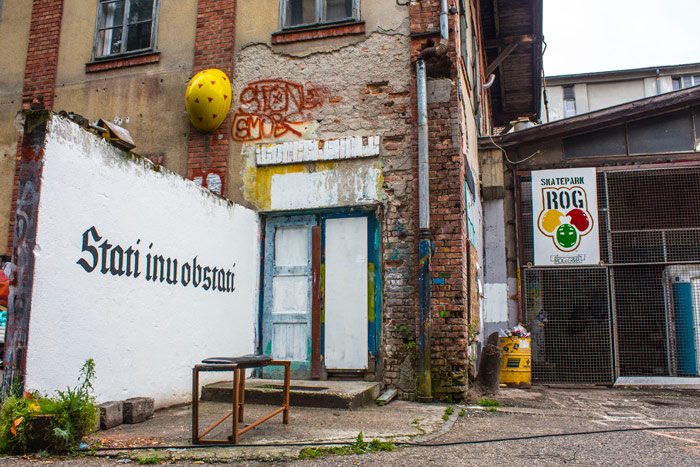

slovenia-bmx-rog-skatepark-entry
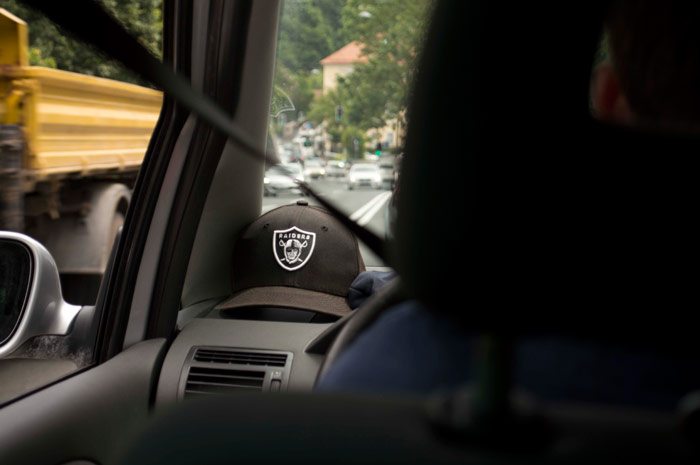
lithuania-bmx-rog-skatepark-car-driver
lithuania-bmx-rog-skatepark-raiders-hat
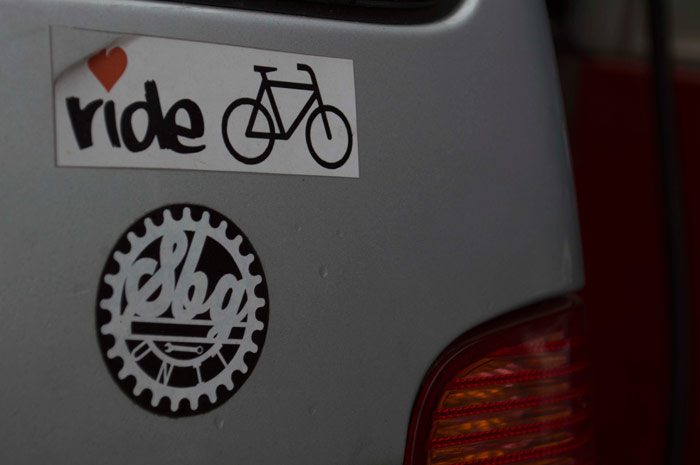
lithuania-bmx-rog-skatepark-stickers

The night before we arrived at ROG to get our shred on, an attack by a group of mindless skinheads occurred. They don’t seem to like the fact that refugees inhabit this space, thankfully there was a limited amount of damage and all was well the next day.

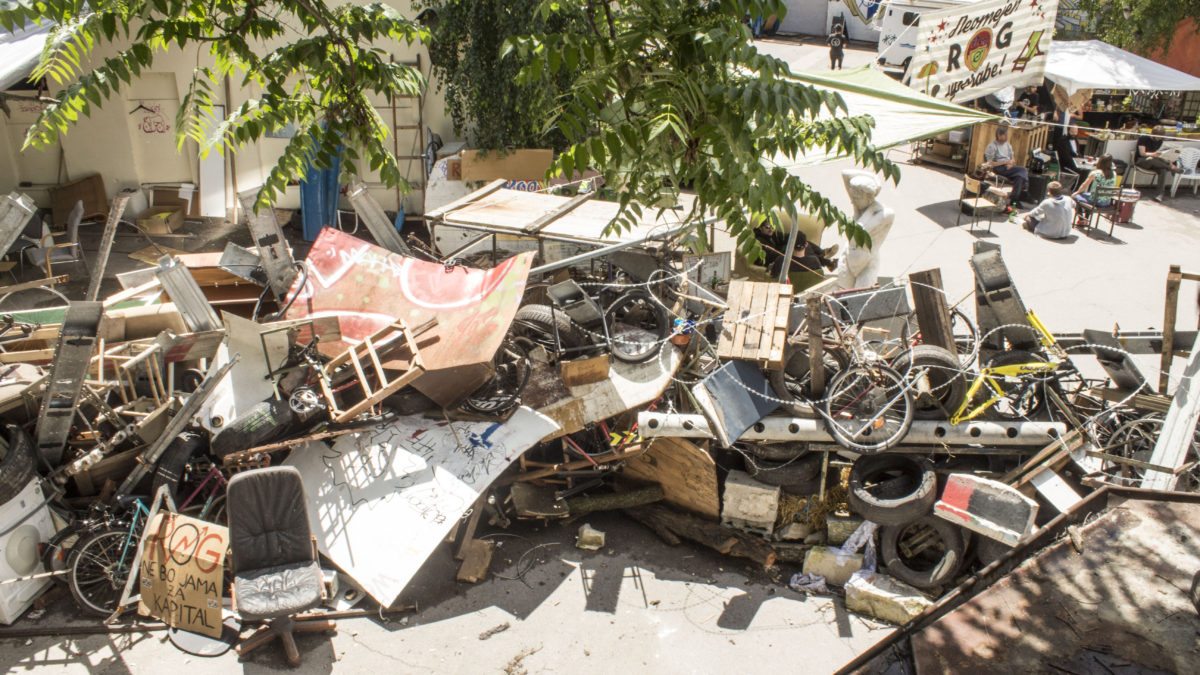
The building was once quite open and easy enough to get into, but following attacks, failed demolition attempts and a touch of animosity, a barricade has been built around the entire facility, metal sheets, tires etc now form a safety net for ROG. At night people stand atop the structure and guard the place to ensure its safety. To help the community, take a second to find out more information and sign the petition – Support For ROG Factory

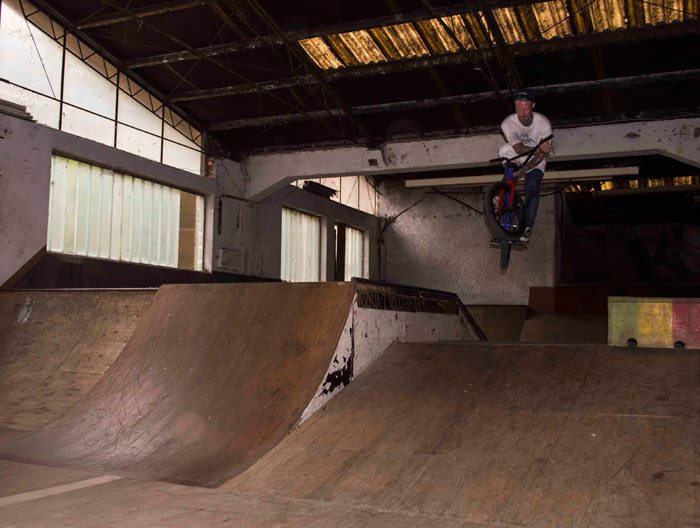
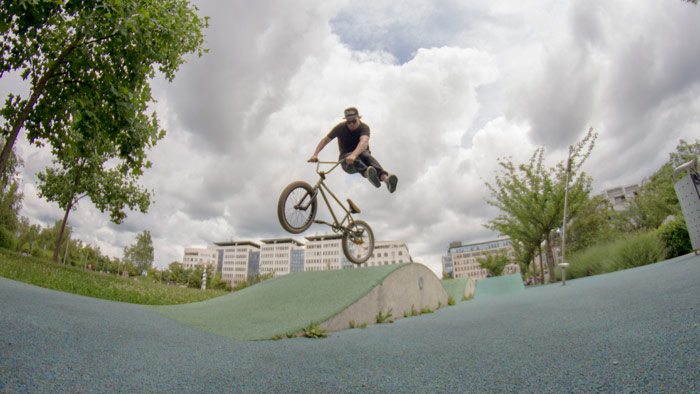
Now, BMX is certainly not all politics and to say everyone had a good time, would be an understatement. For me personally it was one of the best weekends of riding I have had in years.
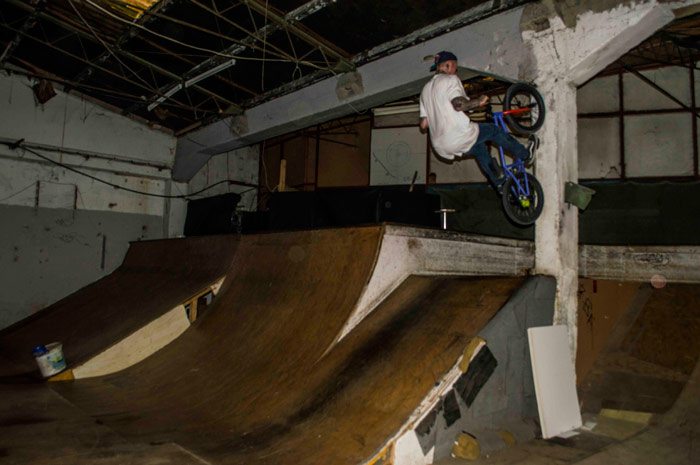
lithuania-bmx-rog-skatepark-fakie-wall

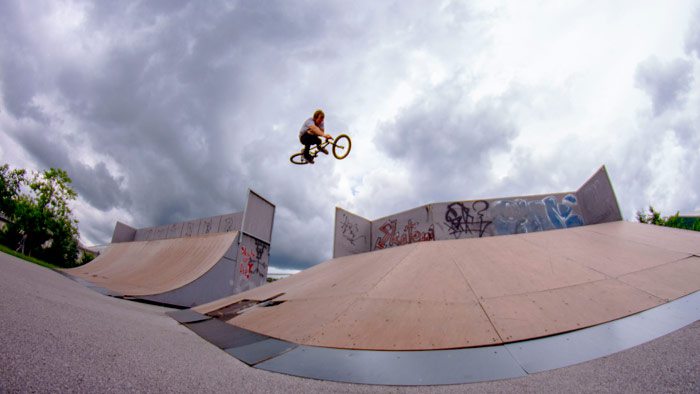
Burn Head fakie wallride.

lithuania-bmx-rog-skatepark-table-barspin

Burn Head barspin.

lithuania-bmx-rog-skatepark-table

Kyle Courtney Wallride to Table

lithuania-rog-skatepark-skateboard-dropin

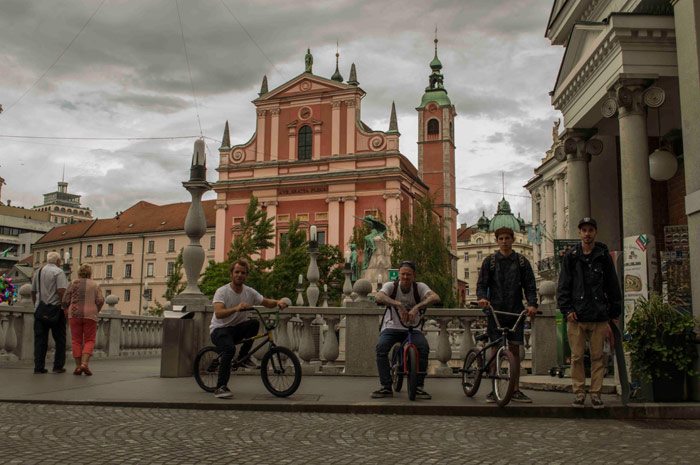
The Salzburg crew (SBG Unit) and I arrived at ROG at around 1pm and the session never ended. The crew was pretty international, in that we had South Africans, Austrians, Slovenians and a Romanian all shredding together so it’s safe to say that everyone was throwing down. That evening after a short break from living our lives to the fullest we returned to ROG for the evenings festivities.

When the door to the club opened at 11pm (The door is next to the skatepark entrance, how convenient?) minds were blown. People packed right in to the venue complete with a stage, functioning bar and Slovenia’s top hip hop acts. A day filled with the indoor park sweats didn’t allow for much energy to party but witnessing the vibe and getting to know the riders better was a complete treat!

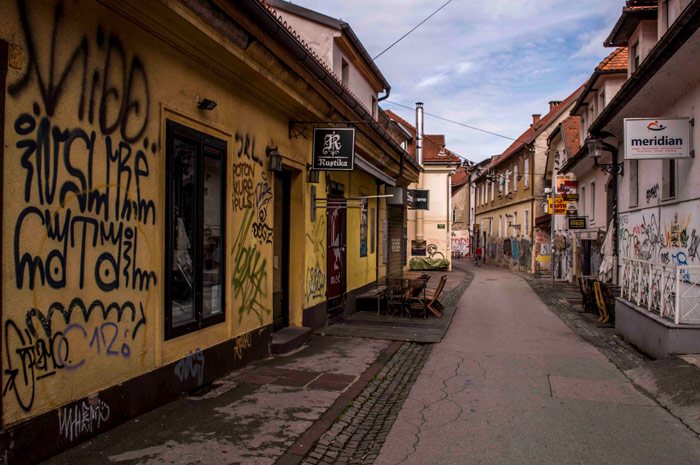
The next day Rok took us on a street mission and sweet lord does Slovenia have spots! How people haven’t started making tons of trips there instead of constantly bleeding Barcelona dry, completely blows my mind.
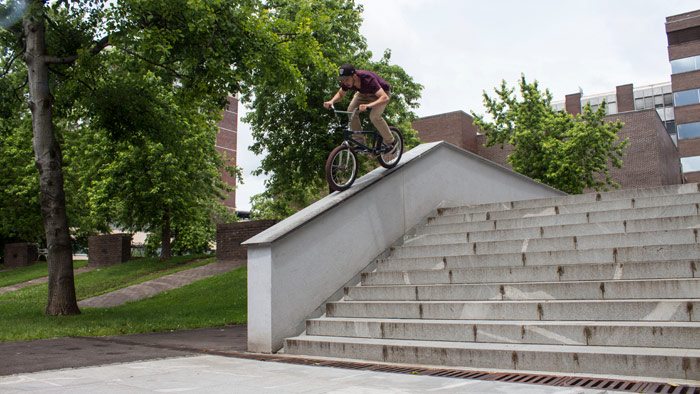
slovenia-bmx-double-tire-ride
Ja Kob double tire ride.

slovenia-bmx-no-foot-can-can

Tyrone Kelly no foot can can.

slovenia-bmx-table-top

Kyle Courtney table top.

If you’re reading this, go and support ROG, let Rok educate you with his skills on a bike and then go tear apart the streets. If you don’t have a great time in the historically beautiful, meets graffiti riddled city, then you’re part of the problem. Also, if you have a similar story/scene and would like people to know about it, let me know – I would love to come hang.

SLEEP LESS.
@Sleepless_in
#Sleeplessinljubljana

Words and Photos by Tyrone Kelly
lithuania-bmx
[Read more…]

What Is Knurling

June 1, 2016

what-is-knurling

There’s a lot of features that BMX frames and parts have that make them stronger, better looking, function better and more. There’s a lot of little things like butted tubing or heat-treating that we talk about quite a bit, but today we figured it would be cool to focus in on another feature that is almost taken for granted. That feature would be knurling. You can find knurling on your handlebars, stems, pedals and tires most commonly, but there are instances where we find it on hubs, pegs and more.

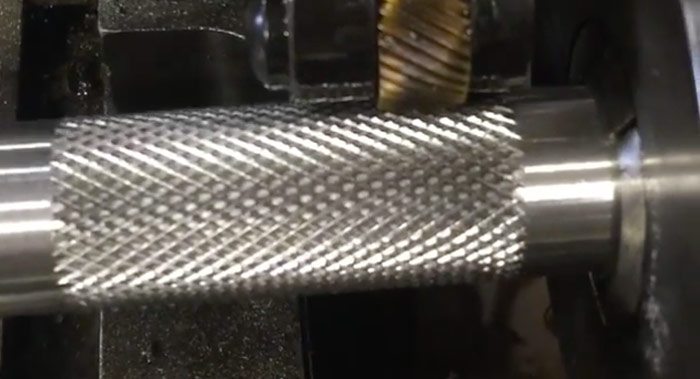
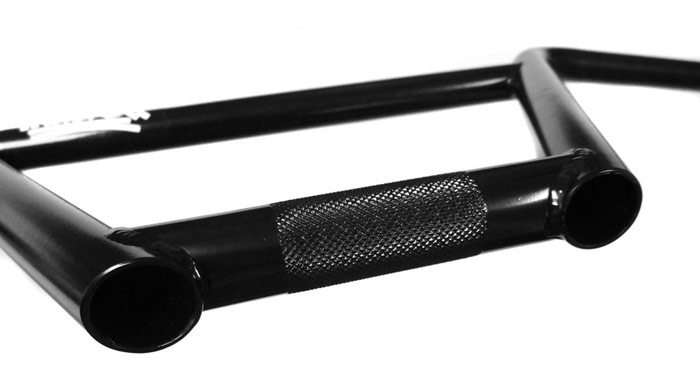
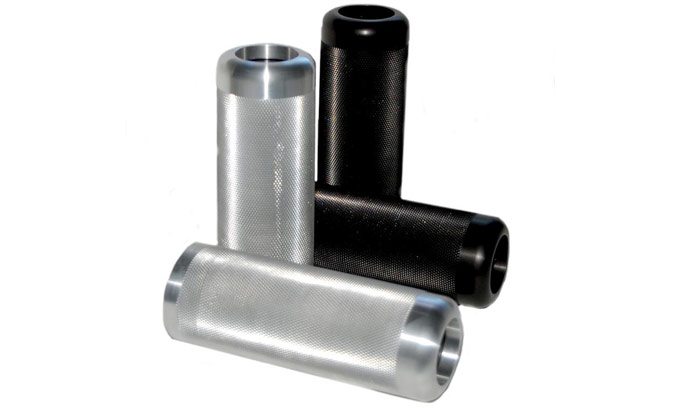
What is knurling? Knurling is a manufacturing process that is typically done with a lathe, where a pattern of straight, angled or crossed lines are cut or rolled into the material. In the case of a tire, it would be applied to the mold like grooves would be.

90east-HNIC-v2-bmx-bars-knurling

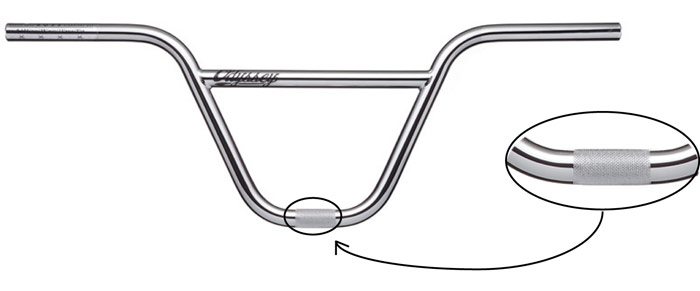
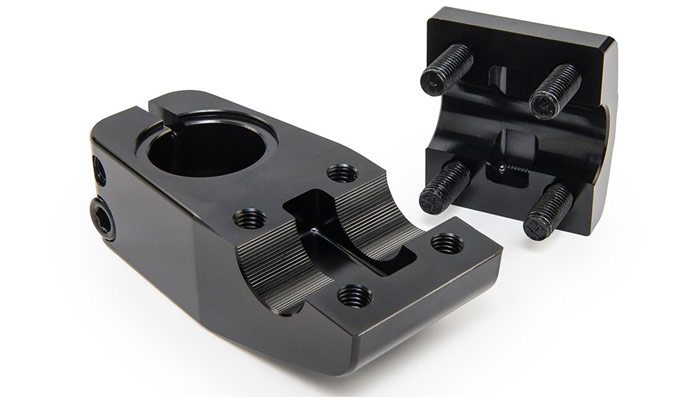
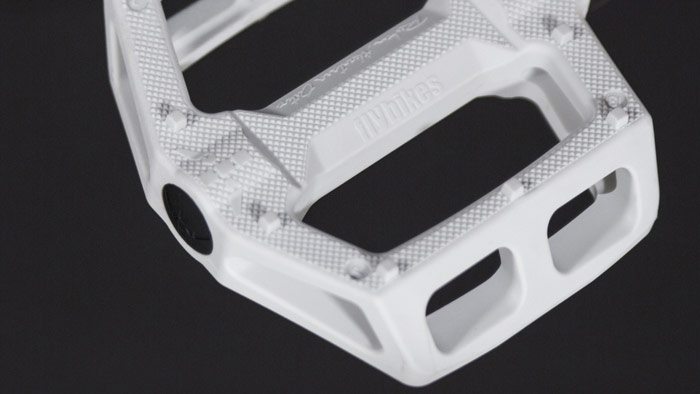
What does knurling do? Essentially knurling is done to improve the grip. For example, when you clamp your handlebars down with a stem, you can find knurling on the bars because if they were smooth it would have a much better chance of slipping. The knurling on the bars helps grip the bars to the metal of the stem, making it much less likely to slip, especially when you properly tighten the bolts down evenly. When it comes to something like pedals, it gives the soles of your shoes more to grab on to than if they were on a smooth surface with only pins to hold them in place.

bmx-handlebars-knurling-700x
Eclat_Slattery_bmx-stem-knurling

The most common form of knurling can be found on handlebars and in some cases stems. Above are the Aaron Ross signature Boss bars from Odyssey and below that is the Geoff Slattery signature stem from Eclat that also features knurling. Not all BMX stems feature knurling, but all bars do. You can also see that the bars feature a cross style of knurling and the stem features straight lines. Two of the three most common forms of knurling on BMX parts

fly-bikes-ruben-bmx-pedal-knurling

shadow-conspiracy-ravager-bmx-pedal-knurling

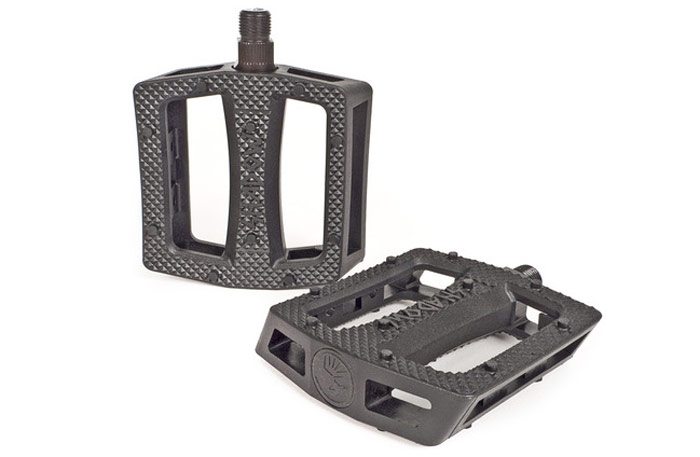
With the plastic pedals being very common on BMX bikes, anything that can be done to increase the traction is key. We frequently find knurling on plastic BMX pedals, along with molded pins which help to increase grip. Above are the Fly Bikes Ruben Pedals and the Shadow Conspiracy Ravager pedals for examples. The Ravager pedals feature a more aggressive pattern in comparison to the Ruben pedals.

kink-bmx-lyra-tire-knurling

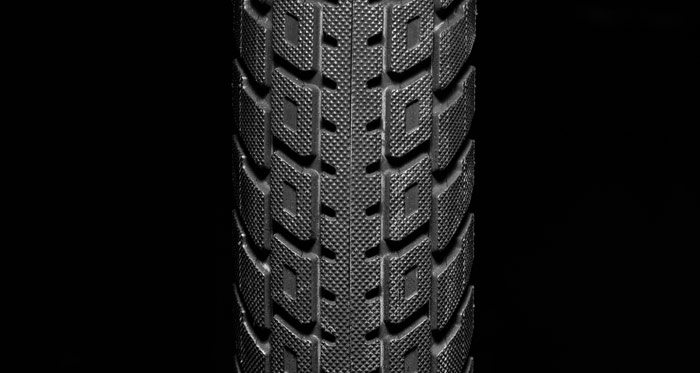
Another common place we find knurling is on BMX tires. Above is a close look at Kink‘s Lyra tire which features knurling all over the knobs and onto the side. This helps give you more traction on slick concrete, dusty trails and smooth ramps.

flybikes-roey-bmx-grip-knurling

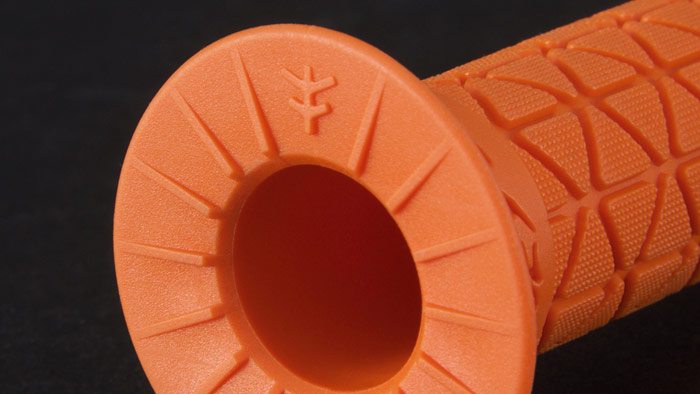
Another place we find knurling from time to time are on BMX grips. Above is a close up look at the Matt Roe signature Roey grips from Fly Bikes that are based off the classic Tri Ame grips. There’s knurling all over each triangle to help prevent your hands from slipping as much.

eclat-kolbri-bmx-hub-cassette-knurling

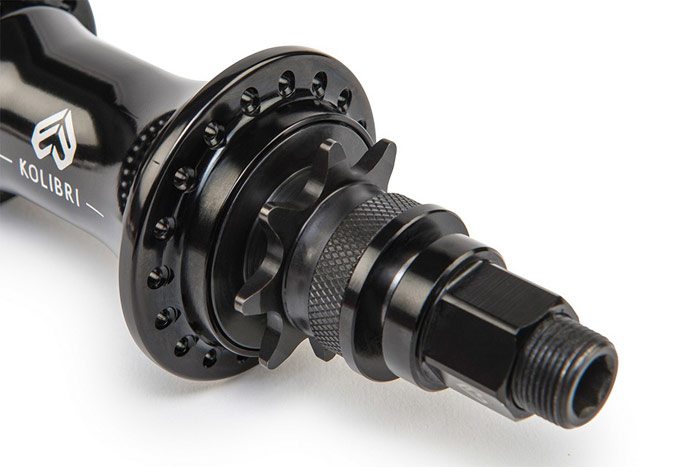
Although it’s more of an aesthetic touch, many of the Eclat hubs feature knurling on their lock nuts. Above is their Kolbri hub which features knurling that also helps the hub hold in place on the dropouts of the frame.

bsd-axle-nuts-washers-knurling-bmx

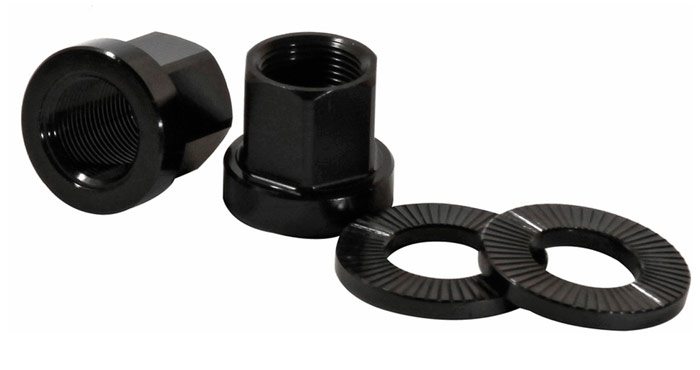
Speaking of hubs, did you ever notice the knurling on some axle nut washers? Here’s a look at BSD‘s 14mm axle nuts and washers that feature straight knurling to help keep your wheel from slipping in the dropouts.

quest-bmx-turbine-pegs-knurling

Although most BMX pegs are smooth because you want less resistance while grinding, flatland riders tend to run pegs with knurling because they do a lot of tricks while standing on them. Above is a look at the Quest BMX Turbine pegs that feature knurling for example.

So, that’s a bunch of examples of places we find knurling on a BMX bike, and there’s definitely other spots you can find knurling on when it comes to a BMX bike.

How is knurling done? Well, that’s where this rad video from S&M Bikes‘ owner Chris Moeller comes in. Below you can find a video of one of the lathes adding knurling to a set of bars they were making out in California. This is how they add knurling to metal products, but plastic and rubber is just added to the mold they pour the plastic or rubber into, so it’s not added with a machine like this.

A video posted by Chris Moeller (@moeller_chris) on Jan 12, 2016 at 1:02pm PST

So, that’s a detailed look into the sometimes overlooked and under appreciated knurling that you can find on a BMX bike. It’s in a lot of places, probably kept you from getting hurt more times than you can count and it even looks pretty damn rad if we may say! Big shout out to whoever invented knurling and everyone who applies it to their BMX products.

We want to hear from you! Let us know what you think in the comments below!

VISIT: FRONT PAGE // DAILY SECTION // BMX COLOR APP // BMX VIDEOS // RANDOM

Why Your Complete BMX Bike Is Broken

May 23, 2016

why-complete-bmx-bike-broke

If you have spent some time on Instagram looking through hashtags for different brands, there’s something that you most likely have seen a time or two. People who like to use their accounts to inform brands and their followers that they broke a part and that they now hate that brand because it failed to withstand the abuse they were putting it through. This is especially the case when it comes to complete BMX bikes that are usually the first bike for a rider. In fact, this really does apply to virtually any product you might bolt on to your bike… Did you catch our What Does A Warranty Cover? post? But today we’re going to talk a little bit about why an inexpensive complete BMX bike might break before a higher end bike would.

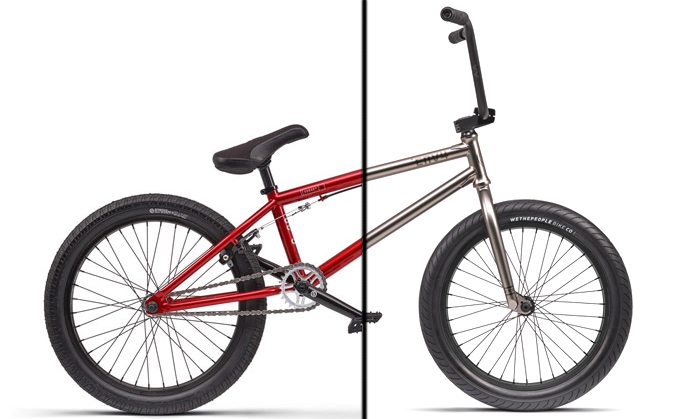
When it comes to complete BMX bikes in 2016 versus what they were five or 10 years ago, it’s like night and day in quality, but that doesn’t mean they’re indestructible. Like pretty much every piece of equipment you can buy, the saying “you get what you pay for” is really about as true as it gets. Most BMX brands that offer complete bikes have a pretty wide spectrum of prices on their bikes and that’s because they offer different levels of quality. Let’s take a look at an example below comparing an “entry level” complete bike with a “high end” complete bike…

wethepeople-curse-2016-bmx-bike

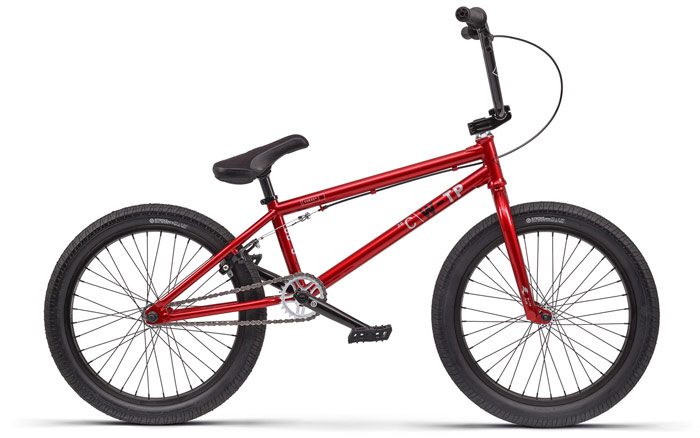
Wethepeople Curse – $379.99

Frame: 4130 crmo down tube, 1020 hi-ten

Fork: SALT “AM 20” fork, 1020 hi-ten , 4130 crmo steerer, 28mm offset

Bars: 1020 hi-ten

Grips: WETHEPEOPLE “Arrow 146” Vex compound grips

Stem: SALT “PRO V2” top loading stem, 50mm reach

Headset: SALT “PRO” int. headset, sealed bearing

Gyro: no / holes for removable gyro tabs

Lever: SALT “AM” alloy brake lever

Brakes: SALT “AM” alloy u-brake rear

Cranks: SALT “Rookie” tubular 3pc crank crmo 170mm, 8 Spline

BB: SALT “MID” 19mm, press fit, sealed bearing

Pedals: ÉCLAT “Surge” nylon/fiberglass pedals

Chain: SALT “AM” chain, 510h type
Sprocket SALT “AM” steel 26t sprocket

Driver: 9t, 1pc cassette driver, sealed bearing

Front Hub: SALT “AM” alloy hub, loose ball 3/8”s axle, 36h

Rear Hub: SALT “AM” cassette hub, full sealed, 9t, 14mm axle, 36h

Hubguards: –

Front Rim: SALT “Valon” rim, straight single wall, 36h

Rear Rim: SALT “Valon” rim, straight single wall, 36h

Seat: WETHEPEOPLE “CURSE 20” pivotal seat

Seat Post: SALT “AM” pivotal seat post

Seat Clamp: SALT “AM” alloy seat clamp

Tires: SALT “Strike” 2.35″ front / “Strike” 2.2″ rear

Pegs: SALT “AM” steel pegs (1 pair)

Weight: 11.8kg (26lbs) w/o pegs & front brake

wethepeople-envy-2016-bmx-bike

Wethepeople Envy – $1099.99

Frame: WETHEPEOPLE “Envy” frame, 4130 full sanko, tapered CS and SS, removable pivots & guides, intg. chain tensioner

Fork: WETHEPEOPLE “Envy” fork, full 4130 sanko with post liquid heat-treated, 1pc cnc steerer, 28mm offset

Bars: WETHEPEOPLE “Envy” bars full 4130 sanko, post liquid heat-treated, 25.4mm clamping

Grips: ÉCLAT “Filter” Vex compound grips

Stem: WETHEPEOPLE “Hydra” cnc alloy top loading stem, 25.4mm clamp, 27mm rise, 50mm reach

Headset: SALTPLUS “Echo” int. headset, sealed bearing

Gyro: no / holes for removable gyro tabs

Lever: ÉCLAT “Sniper” hinged alloy brake lever, two finger version

Brakes: ÉCLAT “Unit” u-brake and bridge cable rear

Cranks: ÉCLAT “Spire” 2.5 pc crank, crmo, 170mm, 48T spline, 22mm spindle

BB: ÉCLAT “CNC” mid size, press fit, sealed bearing

Pedals: ÉCLAT “CONTRA” nylon/fiberglass pedals, removable pins
Chain: SALTPLUS “WARLOCK” halflink chain

Sprocket ÉCLAT “Vent” 6016-T6 alloy, cnc, 26t sprocket

Driver: 9t, 1pc free-coaster driver, RSD

Front Hub: ÉCLAT “Pulse” hub, 3/8s” female bolts, 36h

Rear Hub: ÉCLAT “Cortex” freecoaster hub, sb, 9T, 14mm hollow axle, 36h

Front Rim: ECLAT “Bondi V2” straight double wall rim, 36h, flash welded

Rear Rim: ECLAT “Bondi V2” straight double wall rim, 36h, flash welded

Seat: ÉCLAT “Oz V2” thick padded pivotal seat

Seat Post: WETHEPEOPLE 3D forged alloy pivotal seat post 200mm

Seat Clamp: integratedseat clamp

Tires: WETHEPEOPLE “Stickin” 2.4″ front/ 2.3″ rear

Weight: 11.6kg (25.5lbs) w/o pegs & brakes

Note: We’re just using these bikes as examples and in no way are we saying you will break these bikes faster than another brand or that certain bikes or parts won’t last for a long time. We’re just looking at it from a broad standpoint to explain why one bike is designed to be more durable than another and why one bike can cost less than another. Wethepeople make some amazing bikes for all levels from entry level to high end and that’s why we chose to use their bikes as an example. What we talk about can be applied to any BMX brand.

Alright, so, we’re going to compare two bikes on very different spectrums to make this a little easier to understand. Above are two bikes from Wethepeople that are on two completely different spectrums on price and quality. Both bikes look great to the untrained eye, but when you are familiar with materials and processes, you begin to see where things are different.

Let’s start out with the frames. The Curse is made with a 4130 chromoly down tube and 1020 hi-ten steel. That means that everything but the down tube is steel. The Envy is Sanko 4130 chromoly tubing from front to back. What’s the difference? Strength and weight. 4130 chromoly tubing is stronger and much lighter than hi-ten steel. So, if you were to put the same rider on both bikes and do the same style of riding, the Curse would be much more likely to fail before the Envy frame. But that’s not the only difference, Wethepeople have added tapered tubing, removable brake guides and a number of other features that add to the overall cost of producing the Envy frame.

Next, we can compare the forks and bars. The Curse features a 4130 steerer tube, and 1020 hi-ten steel legs and full 1020 hi-ten steel bars. On the other side, the Envy features full 4130 chromoly on both. The Envy fork and bars are also heat-treated which is a process that, by heating and cooling the chromoly, makes the material even stronger. You can learn about heat-treating here: What Is 4130 Chromoly and Heat-Treating

The cranks on both bikes are 4130 chromoly, right? True, but there’s big differences in the two cranks. The Curse features 3-piece tubular chromoly arms with an 8-spline spindle with pinch bolts. The Envy cranks are 2.5-piece chromoly arms with a 22mm, 48-spline spindle. So, first off we can assume the cranks on the Envy are much lighter because they only require one bolt to keep both arms tight on the cranks, where the Curse cranks feature two bolts to hold the cranks on to the spindle, and 2 bolts to pinch the arms on to the spindle to keep them in place tight. The Envy cranks are 22mm, 48-spline versus the 19mm, 8-spline on the Curse. The larger spindle is stronger and having 48-splines make it harder for you to strip out the splines.

Which cranks would you be more likely to break if you were to put the same rider through the same riding on both? The cranks on the Curse would have a much higher chance of breaking. This is one of those differences that helps keep the Curse’s price much lower than the Envy.

Now, let’s compare the wheels. The Curse features an unsealed front hub with a sealed 9-tooth cassette hub in the back, both laced to single wall rims that are likely pinned versus welded. The Envy features sealed hubs front and back, a freecoaster hub in the rear and double wall, flash welded rims. Once more, when you put the same rider, doing the same style of riding on these wheels and you’re much more likely to see the Curse’s wheels blowing out, hopping and out of true because they are of a lesser quality. Also, with the popularity of freecoaster hubs and the fact that they’re more technical than a cassette hub, they come with a more premium price as well.

When you compare the remaining parts of the bikes against each other, you will find terms like “CNC machined”, “heat-treated” and “sealed” on the Envy, where you won’t find those things on the Curse. Also, if you look at the brands for the parts that are available on both bikes, you can find a few different names. Wethepeople, Eclat, Salt and Salt Plus are all brands under the Wemakethings company. Wethepeople and Eclat are the brands premium products that are higher quality with better materials and different processes applied to them to create stronger, more reliable products. Salt and Salt Plus are sub brands that they have created that feature products that are more inexpensive and don’t feature all the same bells and whistles that you can find on the higher quality Wethepeople and Eclat parts.

The differences in the quality of materials and processes to create these products are what creates such a gap in prices. The Curse would be a great entry level bike for somebody just getting into BMX, where the Envy is a bike that’s designed for the rider that has been riding BMX already, and wants a bike they can get for a great price that’s going to hold up to more advanced riding and tricks that is comparable to if they built a completely custom bike with high quality after market parts.

One thing we should also note is that typically you will find warranty options on higher quality products that cover bending and breaking (not necessarily on complete bikes unless they utilize aftermarket components like the Envy), but you won’t find them on lower end bikes.

This can be applied to every single BMX brand that produce complete BMX bikes whether it be Fit Bike Co., Cult, Flybikes, Volume Bikes, Colony, Subrosa, Kink, Haro, Stolen, United, Verde, etc. The more expensive the bike, the higher the quality the materials and components being used on the bike.

So, to come back around full circle to where we started. The reason why your complete BMX bike is broken is most likely due to the level of riding being done on the bike is harder than the quality it was designed for. Single wall rims will bend easier than double wall rims, 1020 steel is more likely to crack and break than 4130 chromoly.

Is it the brands fault these products break? Unfortunately it reflects bad on them, but it’s not their fault and quite honestly most times out of 10 they shouldn’t be responsible for replacing a part unless it’s due to a manufacturers defect. When we say manufacturer defects, we mean poor welds that are already cracked or cracked easily, defective materials, bent tubing, dented tubing, etc. that wasn’t caused by you because of riding. I highly suggest you check out the What Does A Warranty Cover? piece we did that explains what is typically covered when it come to warranties.

No single BMX product is indestructible and regardless of just how high quality the materials, how perfect the welds and design is… There will always be a way to break it. Whether you’re dropping a 5 stair out on the streets, coming down heavy from blasting a huge air over a box jump, grinding rails and ledges, casing a landing, throwing your bike after a trick doesn’t work out… Bikes break. Just know that going on Instagram to tell all your followers that you snapped your cranks on your $375 complete bike because you dropped a huge stair set 10 times, on top of all the other riding you probably did before that, and that brand sucks because they won’t give you new ones is because you paid for a product that wasn’t designed to take that kind of abuse.

This doesn’t even get into if your bike isn’t properly assembled or maintained, which can lead to a ton of problems that cause your bike to fail early as well. Check out this video on How To Build A Complete BMX Bike out of the Box.

Hopefully this helps people understand that you definitely get what you pay for when buying a BMX bike.

[Read more…]

The Return of the Classics

May 17, 2016

haro-bmx-john-buultjens-postcast-snakebite-bmx-dig

It’s weird how thoughts can be triggered and once those thoughts are started, you really can’t get it off your mind. This morning when I hopped on the computer to get the day started, one of the first pieces of news I came across was that GT Bicycles added Albert Mercado, Dan Conway and Jeff With Glasses to their team. Now, initially it triggered this thought “Man, GT have been really taking steps in the right direction”, but that really just scratched the surface because then it lead to a more in-depth thought which was that GT Bicycles have really stepped their game up since they brought Ben Ward on board. Ben has been making the necessary changes to the team, product and overall image of the brand to really get people looking at GT as a freestyle BMX brand that is putting in some actual effort versus just producing bikes with no real image beside affordability. That lead to the thought of how Haro have really revived their reputation since John Buutljens was put in charge over there.

When you work in the BMX industry, you will undoubtably hear that BMX goes in full circle where trends will come and go, to return later down the road in a more refined (or possibly worse) way. We’ve seen a lot of brands come and go and we’ve also seen the reputations of brands and riders go from high to low or the other way around. In an industry that relies so much on trends and reputations, it’s no wonder that people in power have to walk a thin line to ensure that things continue forward in a positive way. You have one bad falling out in public, like when Stranger added Adam LZ and most of the team quit, or a product that completely flops, you can expect to see that snowball into a shit storm because social media thrives on drama and things that push the buttons of ethics and morals.

It’s funny how a few changes can lead to some pretty amazing things, though. Now, you probably wouldn’t notice it unless you really pay attention but it’s pretty obvious that since John Buultjens has taken the reigns at Haro, the team has become incredibly stacked and the products and brand have received a much higher approval rating than it did in years past. It went from a brand that was associated with this mass production that wasn’t really one of the “core” brands, nor did it seem to really care what these core riders cared about because Haro’s target was more toward entry level riders scooping bikes up through bike shops. I specifically remember a time when a kid showed up at the skatepark on a new Premium frame that he was really stoked on, until somebody pointed out that Premium was a sub-brand of Haro and that he was essentially riding a Haro. It was really weird because there really wasn’t anything wrong with the product, it was just that the association with Haro wasn’t exactly a badge of honor, and that bummed the kid out.

chad-kerley-ck-haro-bmx-bike
Haro released this sneak preview of the Chad Kerley signature CK frame that is in the works.

Once John took over, he put a lot of emphasis on the retro, old school roots of Haro which a lot of people were kind of wondering what the hell he was thinking. Why would anyone be stoked on a bunch of retro bikes beside these “old guys” who are far beyond this “target market” range of 13-18 year olds? Sure, it might have been something that was geared toward going against the current trends in BMX and paying homage to the history of the brand to shake things up a bit, but that was just part of why it was done. In our opinion, John was reviving the old reputation of Haro. That reputation that it was a core BMX brand that had a history of supporting some of the best BMX riders in the world, pushing those riders to show the world that BMX is a legitimate sport to the riders and the masses. They stacked the deck with riders that kids idolized and the older guys respected because they were riders that absolutely crushed it. Haro had DMC, Mat Hoffman, Mike Dominguez to name a few back in the day, which followed up with the crazy Mirra and Nyquist days that put the brand in front of damn near every kid. That followed up with a bit of a quiet period. Mirra left, they really weren’t doing anything innovative beside moving product, Premium was introduced but, in my opinion, never really gained that quality after market reputation because it was attached to Haro. It was in a bit of a rut that was holding the brand down from it’s previous history. That’s what lead to the shake up that lead to John being hired and it’s safe to say they’ve done a good job of reviving the brand to some of its core values. They put Dennis Enarson, Chad Kerley, Tyler Fernengel, Jason Watts and Mike Gray on the team, along with the legends Ryan Nyquist and Dennis McCoy still holding it down like they have for years. Mix in that team with some more appealing quality product and a much more appealing image than they had in past years and it’s easy to see the changes that have been happening that helped alleviate that rut the brand was in.

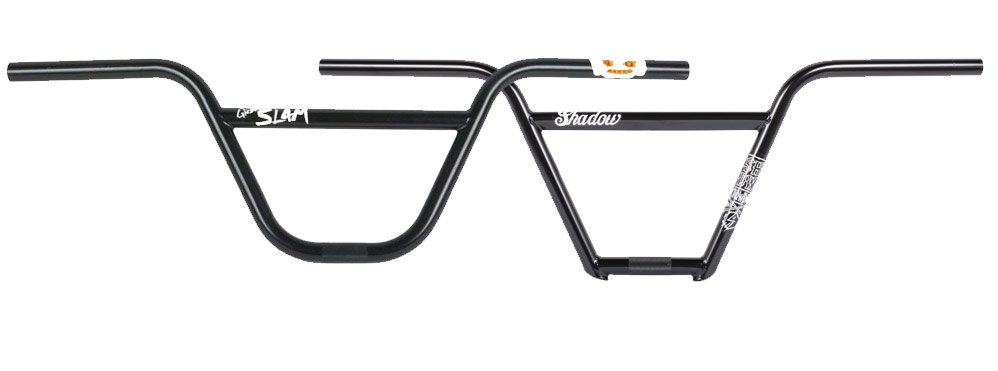
gt-bicycles-4-piece-bmx-bars
Preview of the new 4-piece bars that GT are bringing back based off their originals that started the 4-piece bar back in the day.

It’s a similar story for GT Bicycles. Over the last decade, GT kind of faded out of the freestyle side, sticking to their guns in the racing side of this sport of ours. Sure, they made some complete bikes and kind of dabbled in the freestyle stuff with guys like Jeremiah Smith kind of holding it down for them for a while, but there was never really much of a push to be innovative in the product department. At the end of the day, it was just this corporate brand that was going through the motions to keep the cash flow going.
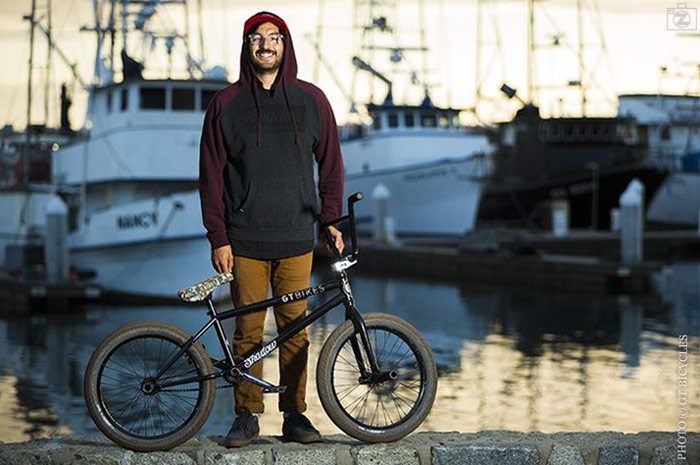
I specifically remember the exact moment that I felt GT would be making some real moves to come back alive like it was in the past, though. It was at Interbike 2014, somewhere between the convention center and the hotel that I bumped into Ben Ward who had been kind of laying low after parting ways with Fit Bike Co., and Odyssey a few years prior to that. Ben had mentioned that he had just taken a new gig with GT and would be handling design work for them, along with their freestyle side of things. He didn’t say much at the time, but it was obvious that Ben would be putting a lot of work in his BMX role at the brand.

Immediately we saw a few shake ups with the team that ultimately lead to Brian Kachinsky, Rob Wise and Jason Phelan holding things down for the brand with Jeremiah Smith parting ways back in December. We started catching some sneak previews of some of their new products that Ben was working on, too. Then we got a look at a good chunk of new product at their Interbike 2015 booth, along with Ben filling us in on a few things he has been working on that wouldn’t be available for a little while. Now, today they announced that they have added Albert Mercado, Dan Conway and Jeff with Glasses to their squad, which is a pretty interesting combination of riders that we never expected to see representing the brand. But, it’s some new enthusiasm that the brand really needed to get some peoples attention again. It might not be on the level that Haro has went with, but seeing those changes are really good considering that a few years ago it seemed like GT didn’t really care to put much into the freestyle side of BMX.

albert-mercado-gt-bicycles-bmx
Albert Mercado with his new GT Bicycles setup.

The next piece of the puzzle is seeing what Ben has been working on as far as the product development goes. What you might not realize is that it can take about two years before you can really see changes take effect because production and development of products is not a quick process, especially when a large brand like GT are working a few years ahead of what’s currently “new” and just becoming available. It might be 2016, but I guarantee there’s plenty of talk about 2018 at GT. These changes and new efforts being made can completely change the image and reputation that riders can have for a brand drastically.

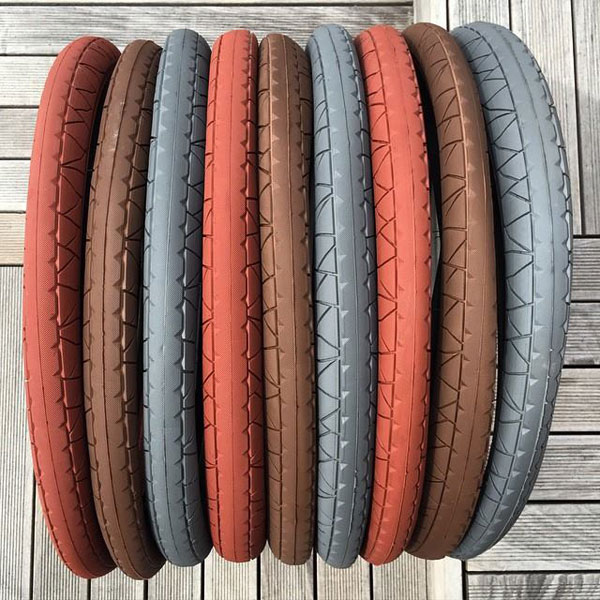
gt-bicycles-pool-tire-bmx

The classic Pool tire from GT revitalized with the new energy from the brand.

So, now that I’ve managed to ramble on and on about two of BMX’s more iconic brands that have been making some key changes to revive their images, all because of some sponsorship news that popped up today. I should probably try and wrap this up and get to the point. I guess what I’m saying is that it’s pretty awesome seeing what can be done when the right people are given the reigns to put a brand back on track. Am I saying that we’ll be seeing Haro and GT taking BMX back over like they did in the past? No, and I don’t think that’s their goal. I don’t think they’re trying to compete with brands like Cult, Kink, Wethepeople or Subrosa, but I do think they’re trying to be a little more involved and current with the freestyle aspect of BMX than they previously had been in years past and that’s important. As much as BMX appears to reject this “corporate” side of the industry, it’s still important to have these brands involved because they do a really good job of reaching beyond the small core BMX community, which is important to draw in more riders and sponsorship dollars that this industry does need to keep the wheels turning. I guess what I’m getting at is that I appreciate that these classic brands still care enough to do things the right way versus what might generate the most revenue and I think that’s important to a lot of other riders, too.

[Read more…]

Maybe It’s Time For BMX To Take A Real Look At Amazon

March 31, 2016

bmx-amazon

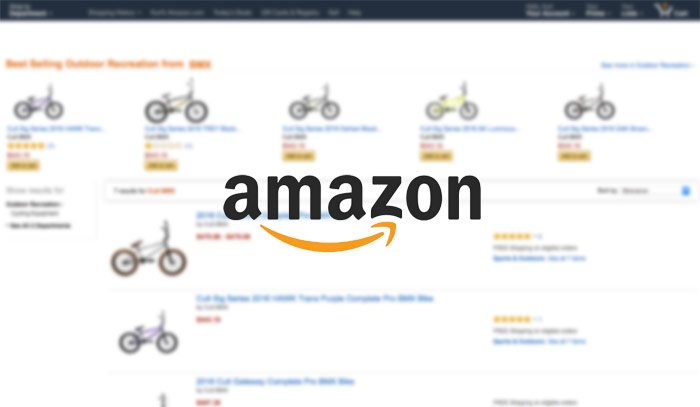
It’s always tricky when a conversation that keeps happening, but really doesn’t make any sort of solid ground happens over and over again. It’s tricky because you quickly realize that that subject is one of those that has a fence in the middle that puts most on one side or the other with a small group waiting to see where things go hanging out on the fence. If you pick a side, you piss of the other side and vice versa. When the Let’s Talk BMX Shops and the Direct To Consumer War post dropped a month or so back, it immediately stirred up a lot of debate, and some people felt it was left pretty open ended and could be explored deeper. We actually tried to get a number of brands to comment on their perspective on the topic of why brands have chosen or not chosen to sell products direct from their website. We quickly realized we hit a soft spot that everyone would be into talking about, but not publicly. Why? Well, some didn’t want to give more attention to brands utilizing Amazon, others felt they might burn some sort of bridges with shops or distributors or generate some negative feedback from the general BMX community and others simply were just waiting it out to see how things panned out to see where the future of the business of BMX goes. Quite honestly, the subject has been crossing my mind pretty much every single day, weighing pros and cons, looking into what opportunities that can be created or how it could destroy certain aspects of the traditional business model the BMX industry uses. Instead of trying to get conversations going through interviews, I decided I’ll just put my personal perspective out there and see if we can spark some discussion… So, here we go… Let’s see who I can piss off the most.

[Read more…]

Let’s Talk About BMX Handlebars and Geometry

March 17, 2016

bmx-handlebar-geometry

Last night, we posted up a photo on our Facebook page asking if you guys preferred two piece or four piece bars. After we posted it up, it got us thinking about BMX Bars in general and the geometry. We figured maybe it would be a good time to talk about some of the details, terms and just what kind of differences you can find in handlebars. Although you might see a few degrees of difference, it can actually make quite a bit of difference. Let’s talk about this.

Update:

If you’re more of a video learner, Brant Moore put together a video based off this article for you to learn about BMX Handlebar Geometry…

odyssey-bmx-lumberjack-xl-handlebars
shadow-conspiracy-crow-bars-bmx

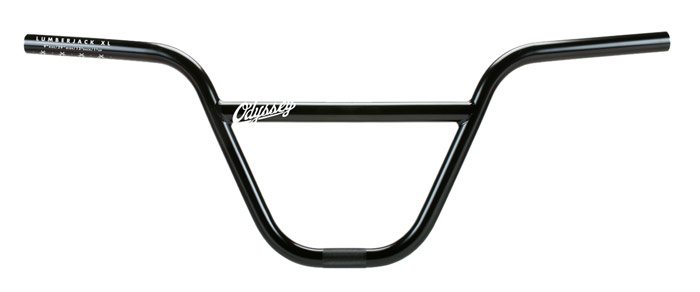
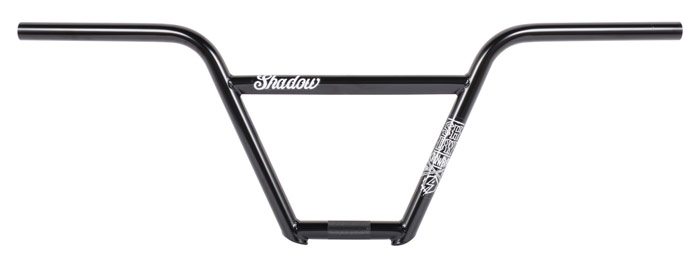
Above are the Odyssey Lumberjack XL and The Shadow Conspiracy‘s new Johnny Devlin signature Crow bars. Looking about both bars, it’s obvious they’re different and they both have different geometries.

Odyssey’s Lumberjack XL bars are made from multi-butted 41-Thermal heat-treated chromoly with a 9″ rise, 29″ width, 1-degree of upsweep and 12-degrees of backsweep with a weight of 33 oz.

The Shadow Conspiracy Crow bars are made from 13-butted 4130 chromoly with a 100% post-weld heat-treatment with an 8.7″ or 9.1″ rise, 29″ width, 3-degrees of upsweep, 12-degrees of backsweep and a weight of 28.2 oz for the 8.7″ rise size. These bars also feature a tear shaped crossbar.

So, looking at both bars, they have some similarities and some differences. Let’s really look at this in detail.

Two Versus Four Piece Bars
Let’s start out with the obvious… One is two-piece (two separate tubes) and one is four-piece (four separate tubes). For those of you who aren’t understanding, the Odyssey bars (top) only use two tubes. One long tube that bends to the shape with one cross bar to help keep the bars stiff and rigid. The Shadow Conspiracy bars (bottom) are four-piece. They both sides have a separate tube, with two cross bars holding them together.

What does this mean? Well, for the most part it’s more of a look thing over anything else. You could argue that two-piece bars are stronger than four-piece bars because there are fewer welds. Fewer welds mean fewer spots where cracks and breaking technically could happen. Not to say we have never seen bars sheer off in the middle of a tube, because that can happen – usually because the tubing was too thin or low quality chromoly – but 9 times out of 10 we’ll see bars break on the bend just beyond the grips at the weld with the top crossbar because this is where a good portion of the pressures from riding land before distributing throughout the rest of the bars. We have even seen handlebars snap where the stem clamps down on the tubing, which could be because of poor quality or the stem being over tightened causing excessive stress. Beyond that, there aren’t really any huge advantages or disadvantages to running two over four piece bars. Well, you might get some additional street cred if you run four-piece bars, haha.

4130 Chromoly VS. Hi-Ten Steel
It’s pretty common to see low end complete BMX bikes come with Hi-Ten steel versus 4130 chromoly (both are steel, just difference in quality, strength, weight). But, for the most part, BMX handlebars and most of your bike are made from 4130 (sometimes 4140) chromoly tubing. 4130 is much stronger than Hi-Ten, which allows you to use thinner tubing to save some weight and still be stronger. You can learn more about 4130 Chromoly here – What Is 4130 Chromoly

Heat-Treating
Both of the bars we used for an example above happen to be heat-treated. Heat-treatment is a process done to chromoly to alter its properties that can change hardness, strength, toughness, ductility and elasticity in the material. Ultimately, the process can make it stronger (sometimes weaker if done improperly) and hold up better to the levels of stress and abuse that BMX puts on the material. Odyssey have their patented 41-Thermal process that comes with a lifetime guarantee against bending and breaking which is a pretty clear indicator that they put a lot of trust in what their heat-treatment process does to increase the overall strength. Want to learn more about heat-treatment? What Is Heat-Treating

flybikes-bmx-handle-bar-butting

Butting
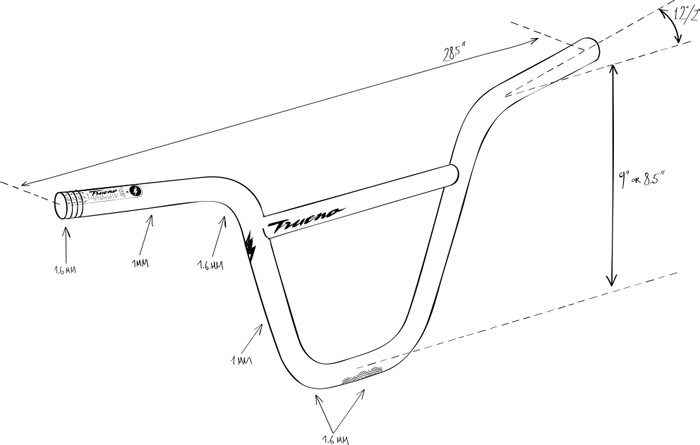
Butting is another one of those terms we see in BMX handlebars a lot. Butting is a process that makes the tubing used thicker in some places that take on more stress, such as bends, and thinner in areas that are less likely to bend or break like the middle of a tube. Fly Bikes have some great graphics on their website showing where they have placed butting on their handlebars (and frames). As you can see from the graphic above, there’s multiple spots where they have made the tubing 1.6mm thick versus 1mm thick. This allows for that extra strength on the high stress points (bends and ends of tubing) and where it can be thinner to save a little weight.

odyssey-bmx-lumberjack-xl-handlebars-rise-width

Rise and Width
Rise and Width is one of those things that we have seen A LOT of change in over the years. The width and height have both increased a couple of inches each. We actually put together something about that not too long ago – Raise the Bar: A Look at BMX Bars – that looked at how much bars have grown in the past decade. But, that’s another topic.

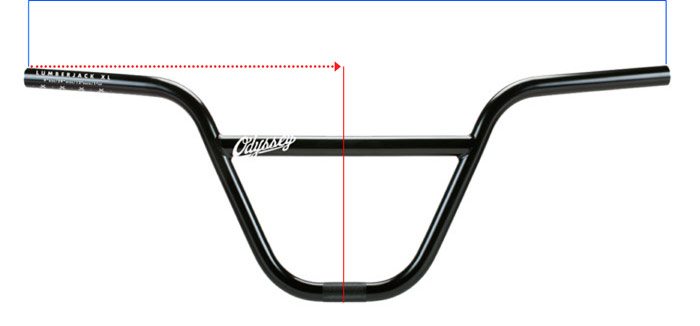
The Rise of the bars are the height from the bottom of the bars at the center where the knurling is, to the highest point of the bars. With upsweep, it’s the very ends of the bars. We’ve explained that in the graphic about with the red lines. When it comes to rise, this is more of less a personal preference over anything else. We typically see taller riders using higher rise bars to help keep them from hunching over, making for a more comfortable ride. But, we also see a lot of smaller riders riding big bars because they are also comfortable and some feel it can help increase leverage when it comes to bunnyhopping. However, we still feel anything beyond 10″ is excessive, haha.

The Width is the measurement straight across from one end of the bars to the other, outlined in the blue. Most bars these days offer between 28″ and 30″ of width. Many of which end up cutting a quarter of an inch to a half inch off just because they prefer to run their hands closer to the inside of the grips and bends. Traditionally, you would want your bars to be about the width of your shoulders, so in reality, 28″ is about right for most people, but there are bigger riders out there that can utilize the 30″. Similar to height, width is also a personal preference as to what feels right. Just remember before you go hacking your bars down, it’s easier to make your bars narrower than it is to make them wider… So, make sure you’re 100% sure before you trim.

Upsweep and Backsweep
Upsweep and backsweep are two things that are ultimately a personal preference over anything else. But first, let’s talk about what these terms mean. Upsweep is the amount that the bars bend upward from the top bend to the outside of the bars. We see some flatland bars coming with 0-degrees of upsweep and we see some with 4-degrees of upsweep. It doesn’t seem like much, but those few degrees can really be felt in your wrists. For example, I personally picked up a pair of Gary Young bars that had 4-degrees of upsweep and my wrists were not having it. I currently run Fly Bikes Montaña bars with 1.5-degrees of upsweep and I don’t have the pain that 4-degrees gave me. It’s a bummer because I really wanted those Gary Young bars, because Gary kicks ass, haha.

Backsweep is how much the bars bend back from center. So, when you look at your crossbar, that has zero degrees of backsweep and that line across would be center. If your bars had zero degrees of backsweep, they would line up all the way across from end to end. The backsweep helps with control and also makes it so you sit a little bit behind the bars when you’re pulling up versus standing directly over the bars. If you had negative sweep, or front sweep (which as far as we know doesn’t exist), your bars would pull you forward more and your wrists would turn your hands inward, making it harder to pull up and ultimately control your bike. The amount of backsweep is also a personal preference. I can’t recall ever having an issue with pain or anything due to backsweep, but I’d be willing to bet somebody out there has.

Tear Shaped Crossbar
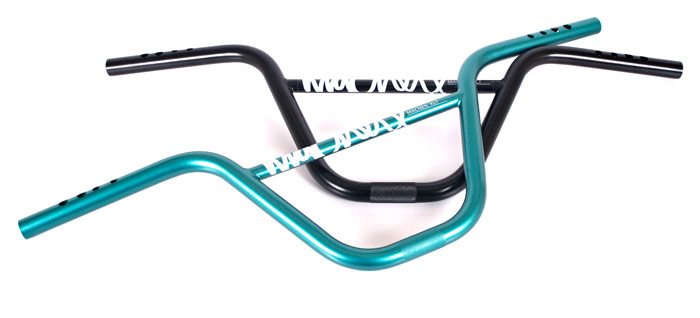
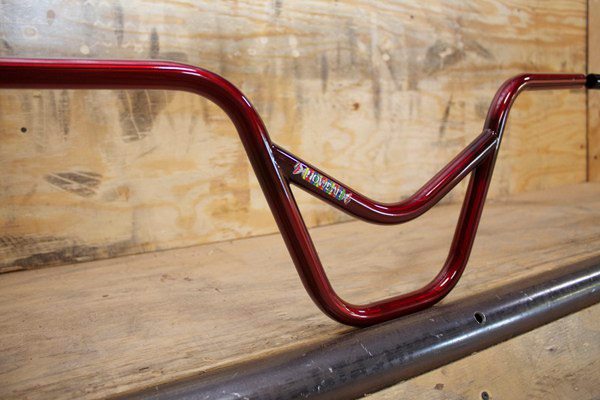
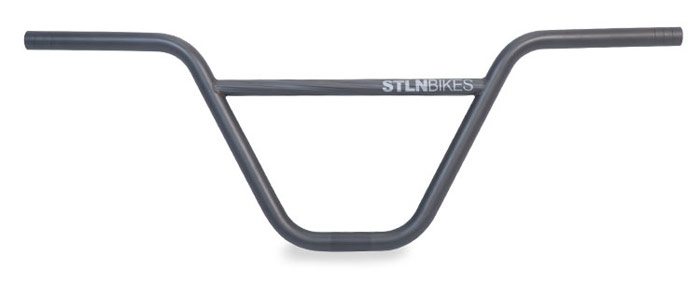
So, if you recall way back at the beginning when we were talking specs and details of the two sets of bars, you might recall that the Crowbars (4-piece) have a tear shaped crossbar. What does that mean? Well, it’s more of an aesthetic thing than anything else. The tubing isn’t round, it’s round on top and pinches inward toward the other side, similar to what a drop of water would look like. There really isn’t any huge benefit to it as far as strength or anything else goes, but it looks cool. Over the years we’ve seen a number of brands offer different crossbars. A few examples would be the Nowear Candybars that feature a v shaped crossbar, similar to the old Sergio Layos signature Pantera bars back in the day, Macneil‘s old Silencer bars featured drilled holes in the ends of the bars, which were not quite sure how well that worked out, but it looked cool and saved a little weight, and Stolen have their Deviant bars with the Vortex crossbar.

macneil-bmx-silencer-bars

Macneil Silencer Bars

nowear-bmx-candybars

Nowear Candybars

stolen-bmx-deviant-8.5-Raw-bars

Stolen Deviant bars.

So, that about wraps things up. When it comes down to it, BMX handlebars are more or less personal preference to what you feel comfortable with. Big, small, wide, narrow, no upsweep, a lot of upsweep, more backsweep or less… It’s all about finding that right combination that feels good and you think looks good. So, what do you prefer? Do you have any questions? Let us know what you’re thinking in the comments below!

The Art of the BMX Sprocket

March 4, 2016

federal-bikes-bbs-sprocket

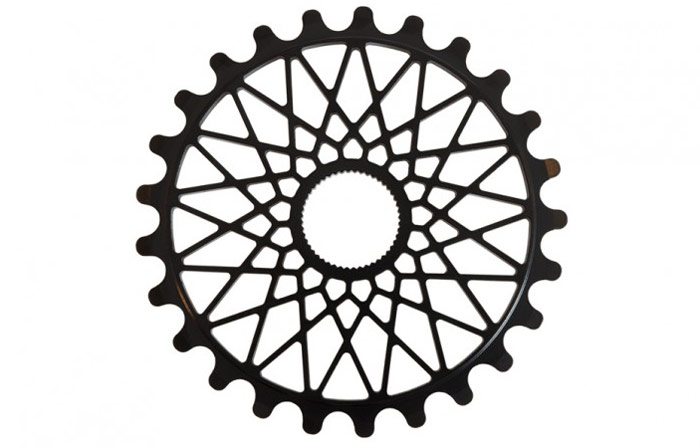
It’s been a while since we’ve done one of these “The Art Of” pieces, so we figured it would be a good time to take a closer look at one part in particular that we’ve been thinking about lately, the BMX Sprocket. The other day we were bouncing around to a few different brands websites to see if there were any new products or anything else new to see, and we ended up staring at the sprockets. When you think about it, the sprocket is one of those things that can really be altered the most as far as aesthetics go. We’ve seen A LOT of sprockets in BMX’s history, so we decided to stick to sprockets that are currently available. Even with cutting it back to that, there’s still a ton of options available. Add in the different combos between the standard bolt drive, Spline drive, and socket drive, colors, versions with guards, etc. There’s a lot to take in. We bounced around and picked out some of our favorites from a number of brands, which you can check out below with a few words about each! Ready?

[Read more…]

Frostbike 2016 – Odyssey BMX

February 28, 2016

frostbike-2016-odyssey-bmx-banner

It’s that time of the year again where QBP open their doors to shops and media to get some personal time with the brands they distribute. Yesterday, we made the trip up to Bloomington, Minnesota to check in with the different BMX brands that were at the show. We pulled the camera out to see what was on display. So, let’s start things off with the Odyssey booth to see just what they were showing off.

[Read more…]

  • « Previous Page
  • 1
  • 2
  • 3
  • 4
  • …
  • 84
  • Next Page »
Home
Daily BMX Videos & News
BMX Color App
BMX Spoke Calculator
Submissions
Advertise
What Is BMX? What Does It Mean?
What Does A Warranty Cover?
BMX Frame Geometry Guide
BMX Handlebar Geometry Guide
BMX Tool Guide
BMX Multi-Tool Guide
BMX Frame and Parts Guide
5 Keys To Keeping Your BMX Bike Dialed
Rad - Full Movie
Privacy Policy
Affiliate Disclosure
Join Our Email List
Affiliates & Supporters
Vans
Etnies
Dan's Comp
Life Brand
Note: This site contains affiliate links and we could receive a small commission that supports this site if you were to make a purchase on their websites using our links for no extra charge to you.

Copyright © 2025 · BMX UNION - All Rights Are Reserved.

pixel